








GR-0626-7013, 1st Model Colt Paterson Ring Lever Rifle Accompanied by extensive family provenance identifying the rifle as belonging to Mormon Pioneer Captain John Hindley. BUY NOW
$80,000.00
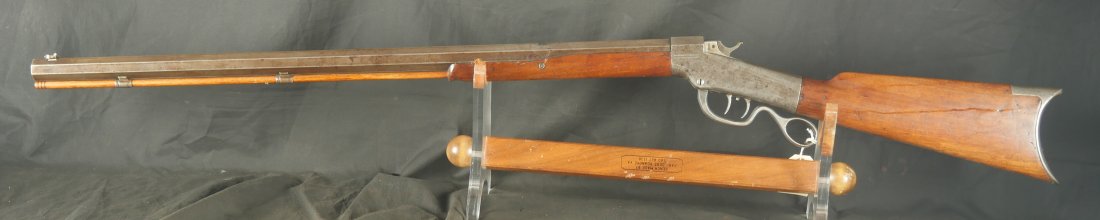
GR-0626-7013, 1st Model Colt Paterson Ring Lever Rifle
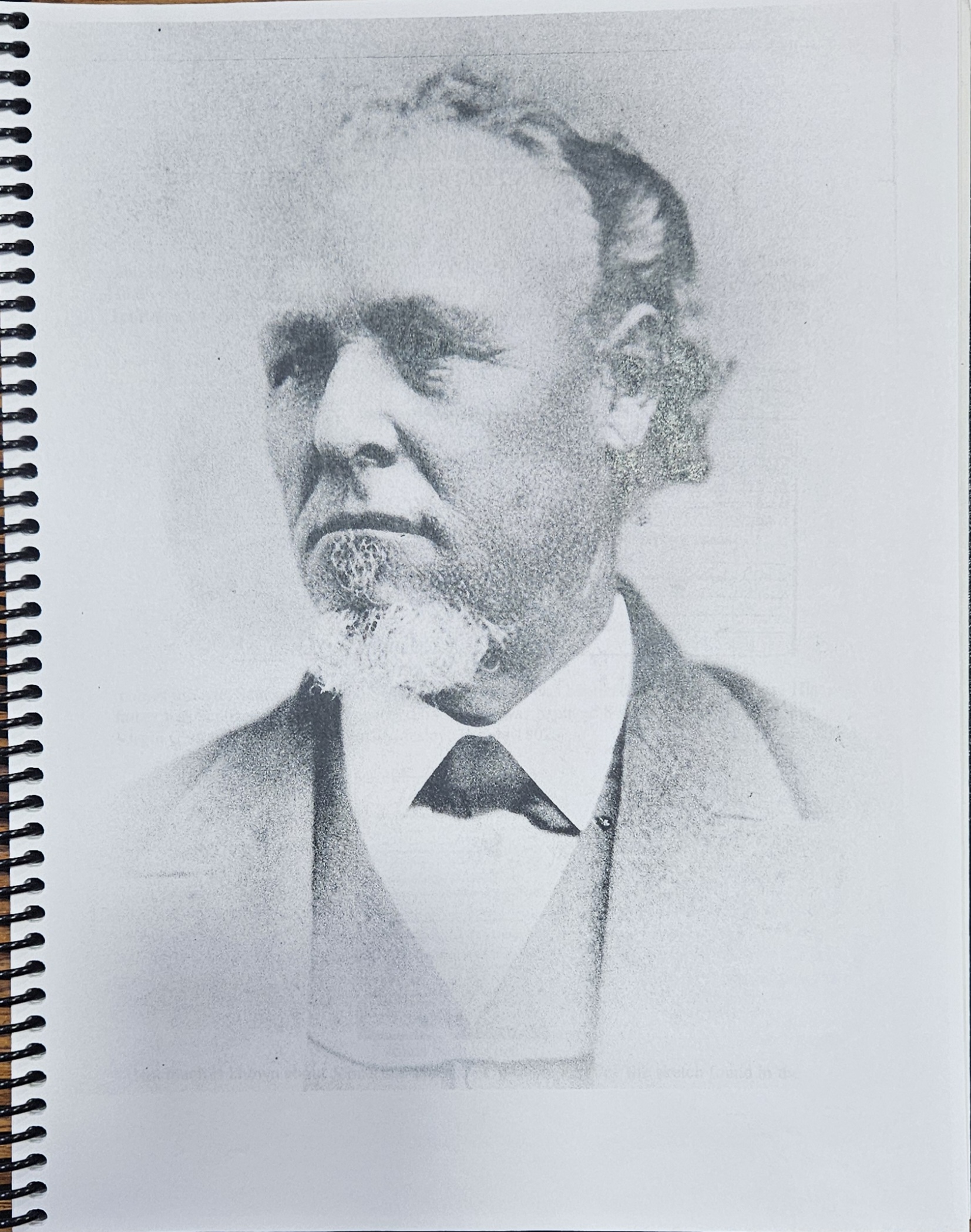
Accompanied by extensive family provenance identifying the rifle as belonging to Mormon Pioneer Captain John Hindley (1826–1899), who led a company of 206 emigrants and 46 wagons across the plains to Utah in 1855 and later became a prominent freighter, merchant, Justice of the Peace, and civic leader in early American Fork, Utah.
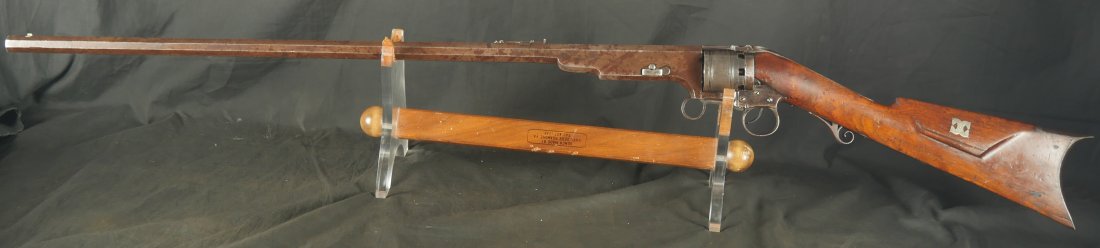
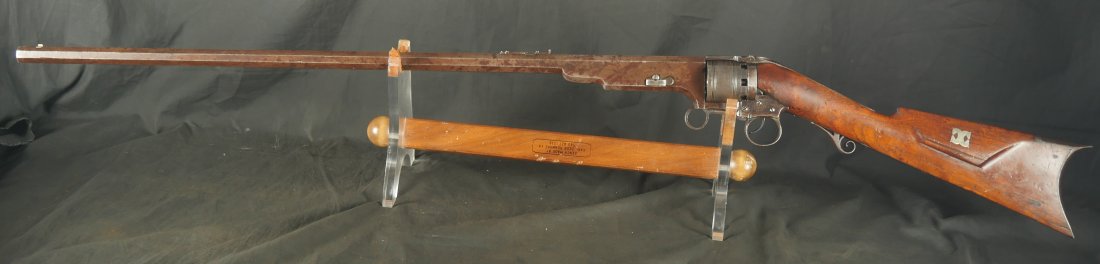
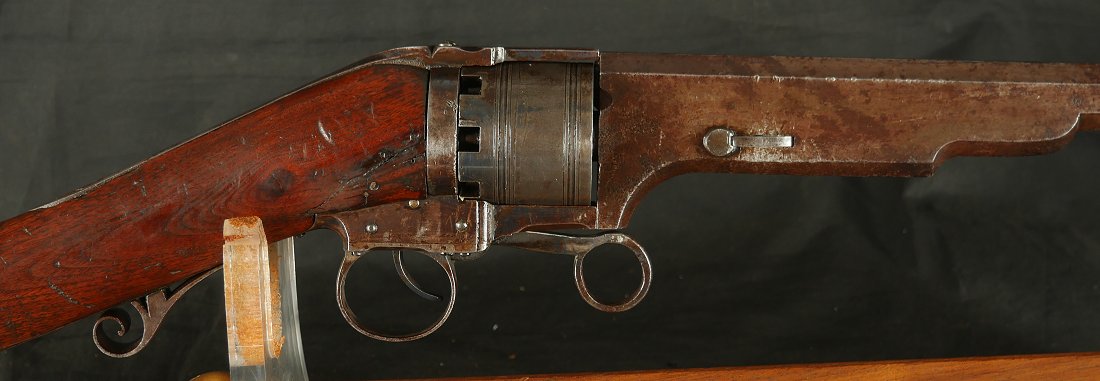
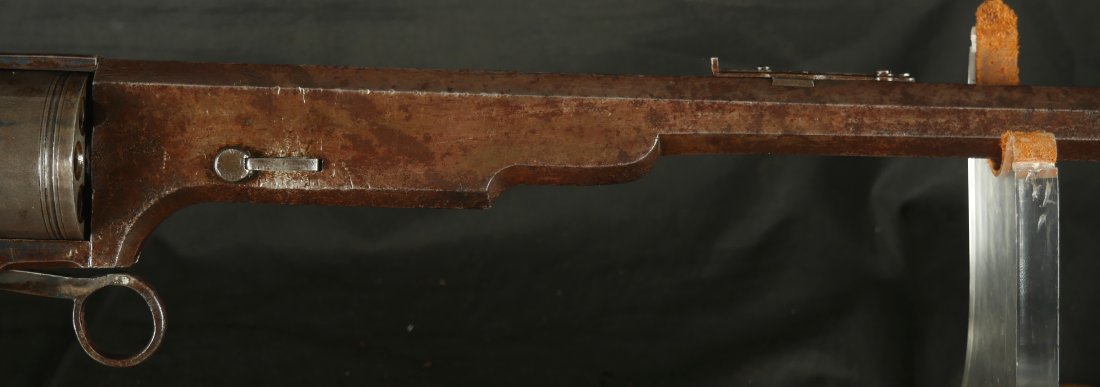
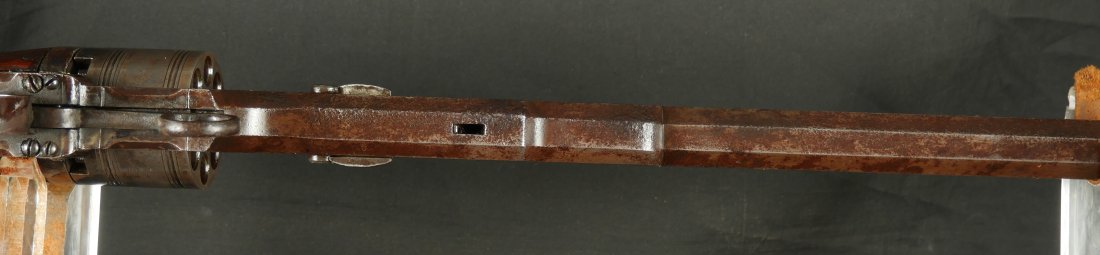
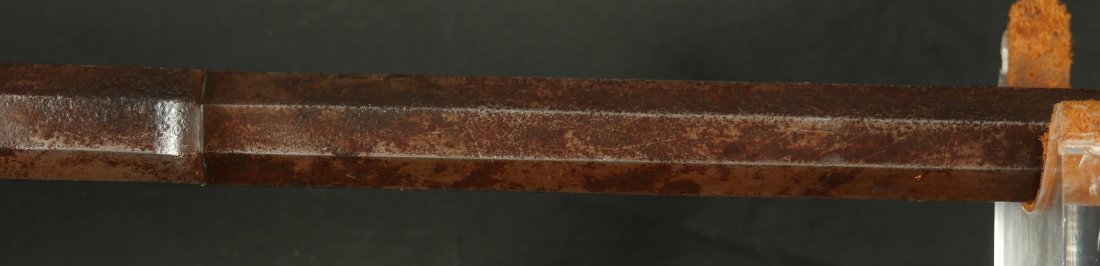
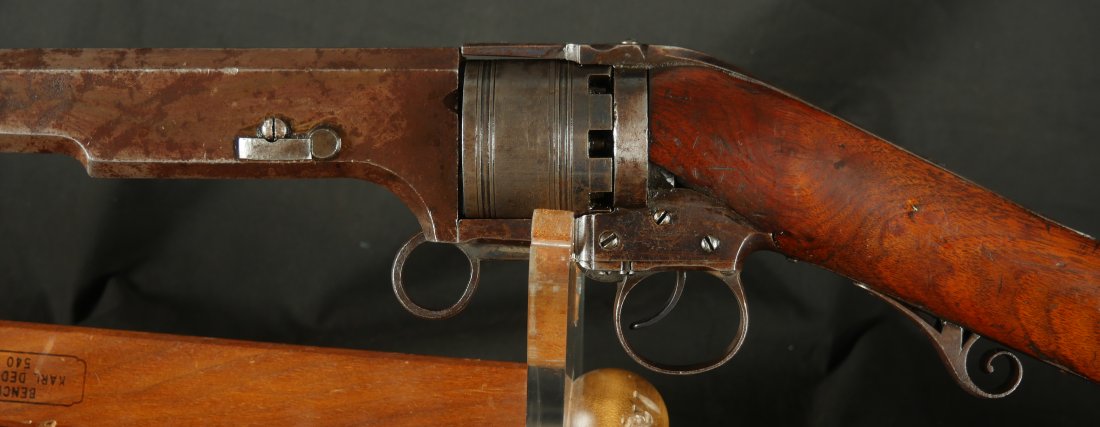
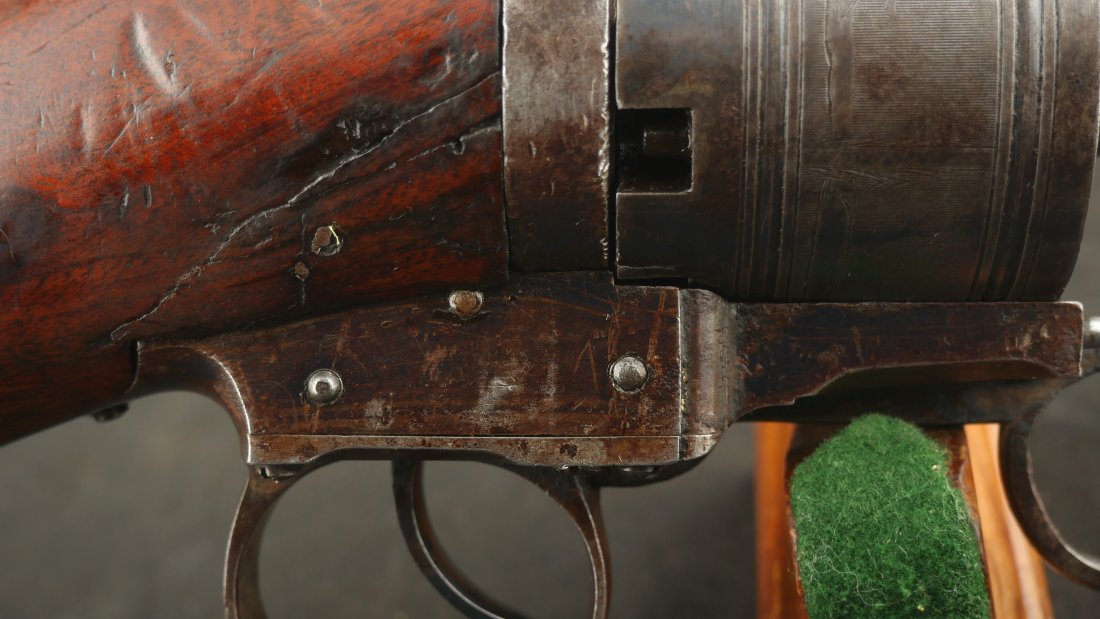
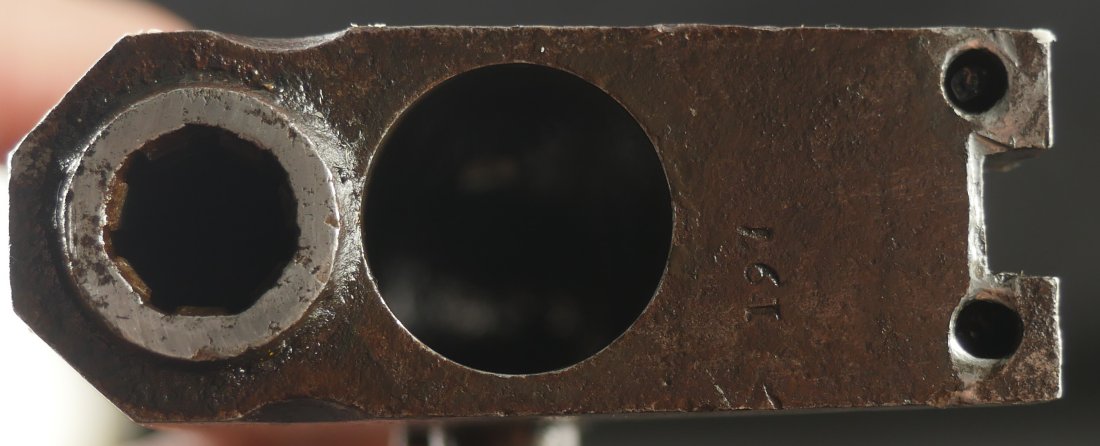
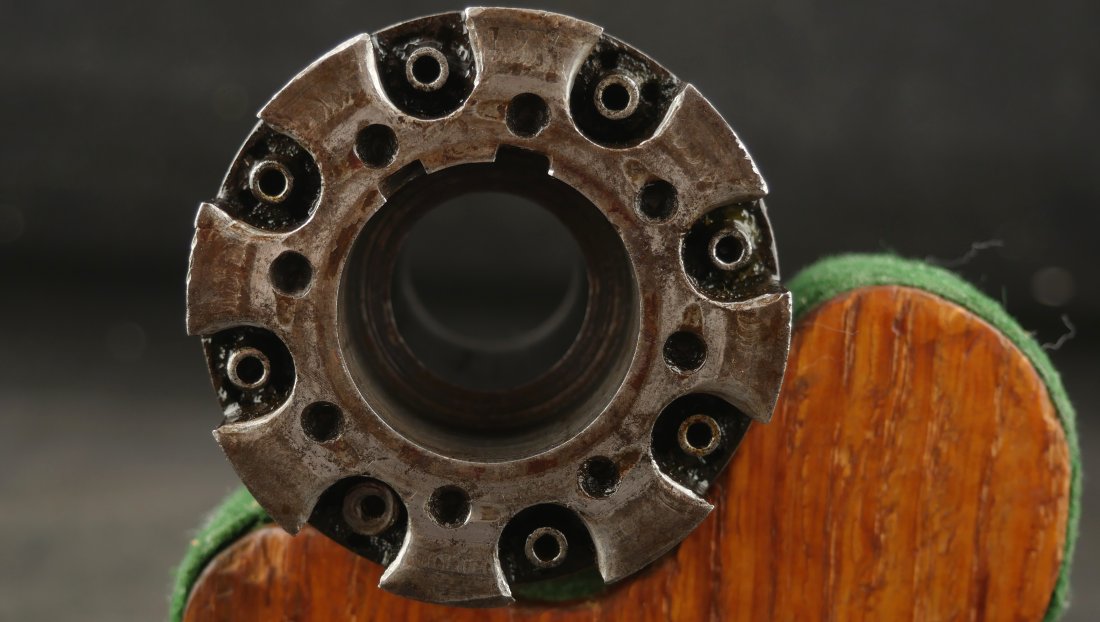
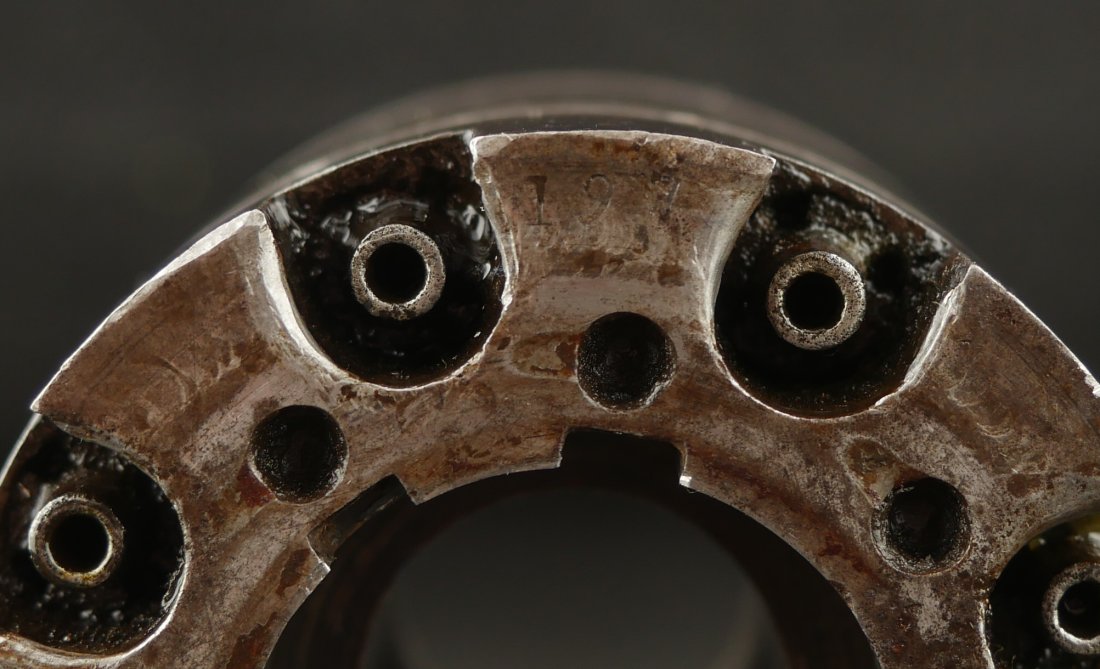
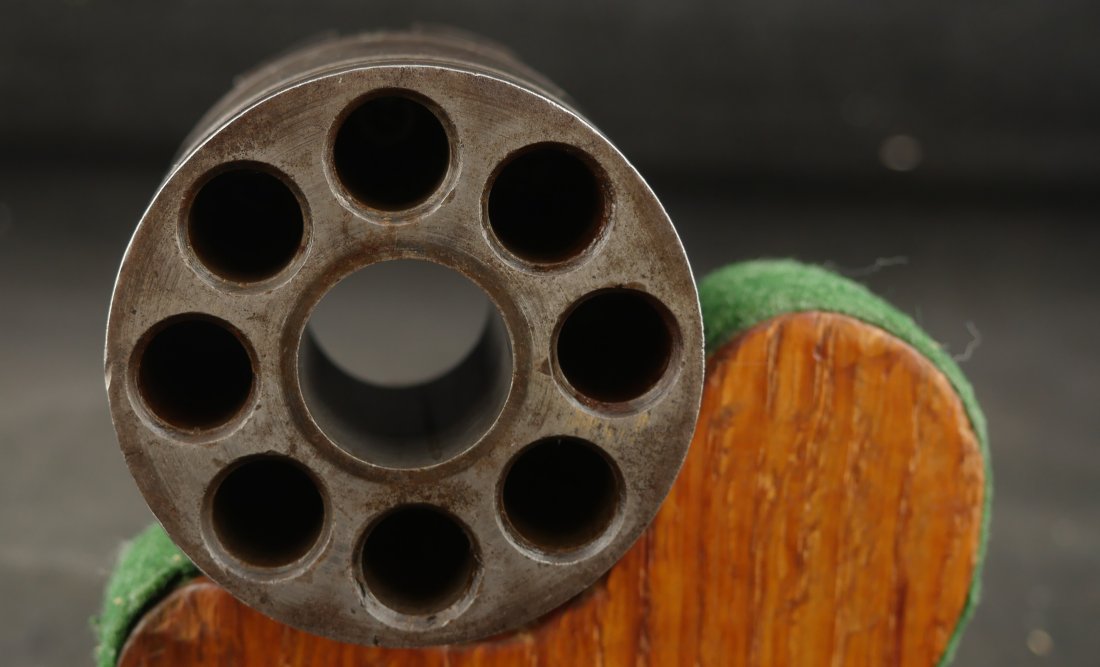
Serial number 197, .40 caliber, 32-inch octagonal barrel, 8-shot cylinder.
Approximately 200 First Model Colt Paterson Ring Lever Rifles were manufactured between 1837 and 1838, making them among the rarest and most desirable firearms ever produced by Samuel Colt. Serial number 197 is one of the highest known serial numbers produced and was likely manufactured near the end of First Model production.
Many collectors are unaware that Samuel Colt’s first production firearm was not a revolver, but the First Model Colt Paterson Ring Lever Rifle. Only months later Colt introduced the famous Paterson revolving pistol, making these rifles the true beginning of Colt firearms production.
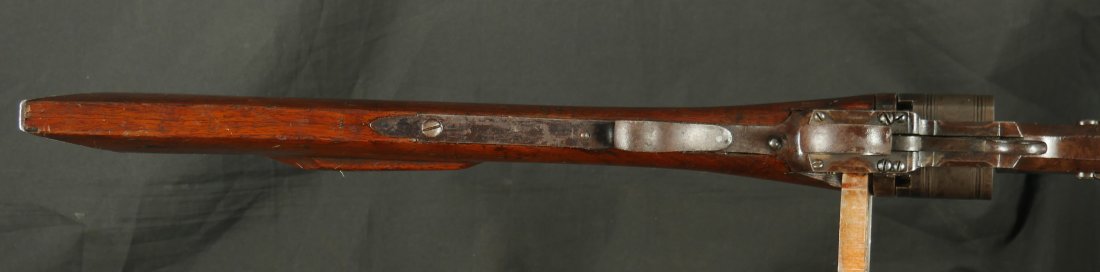
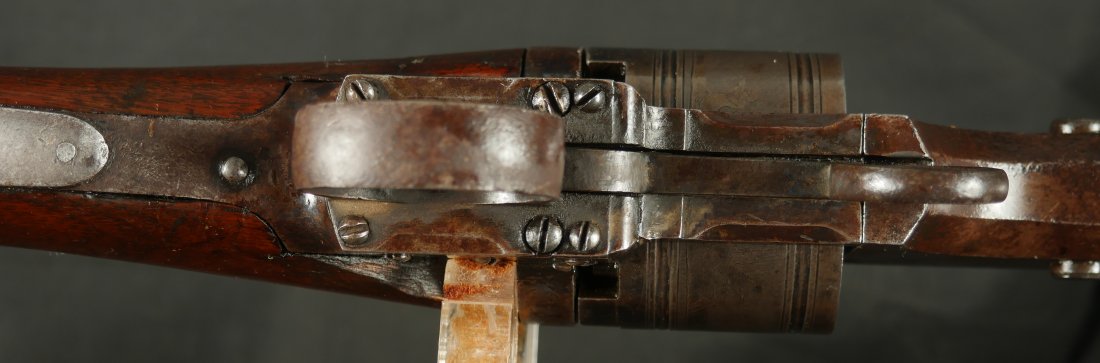
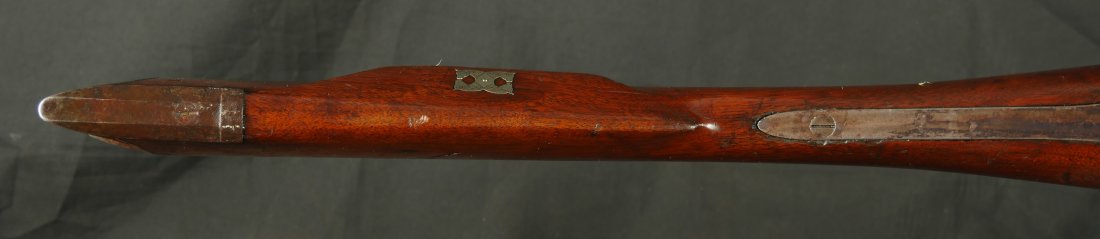
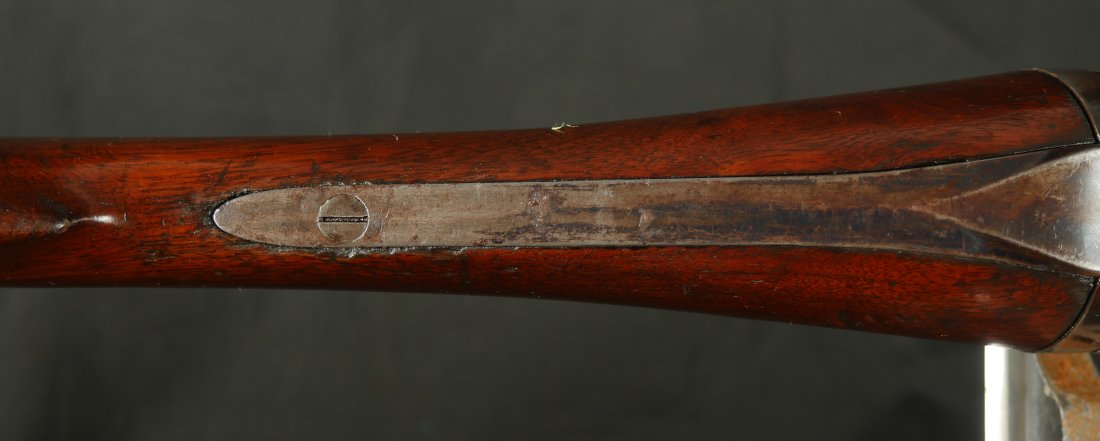
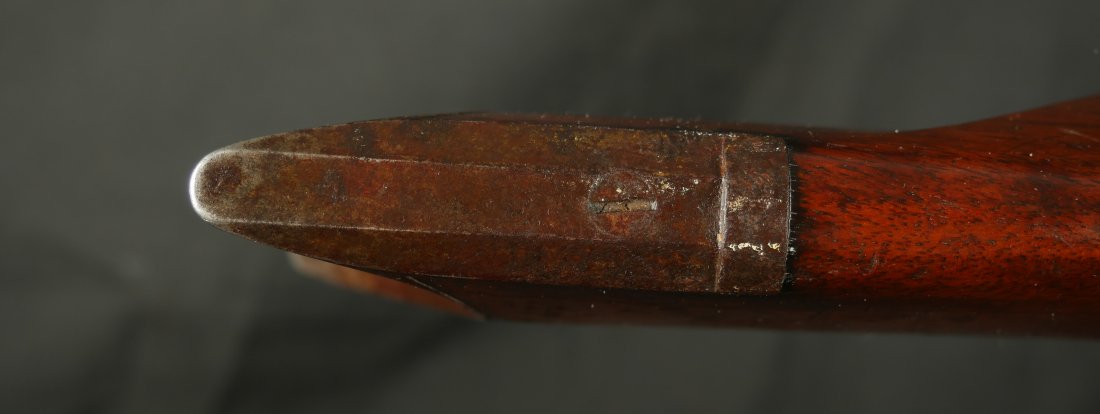
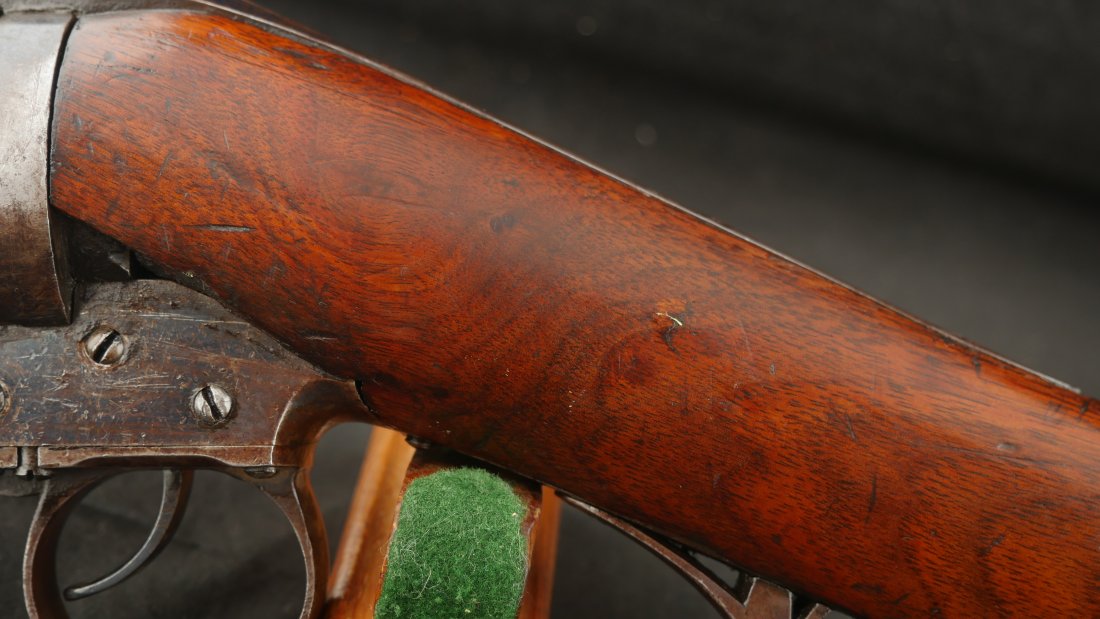
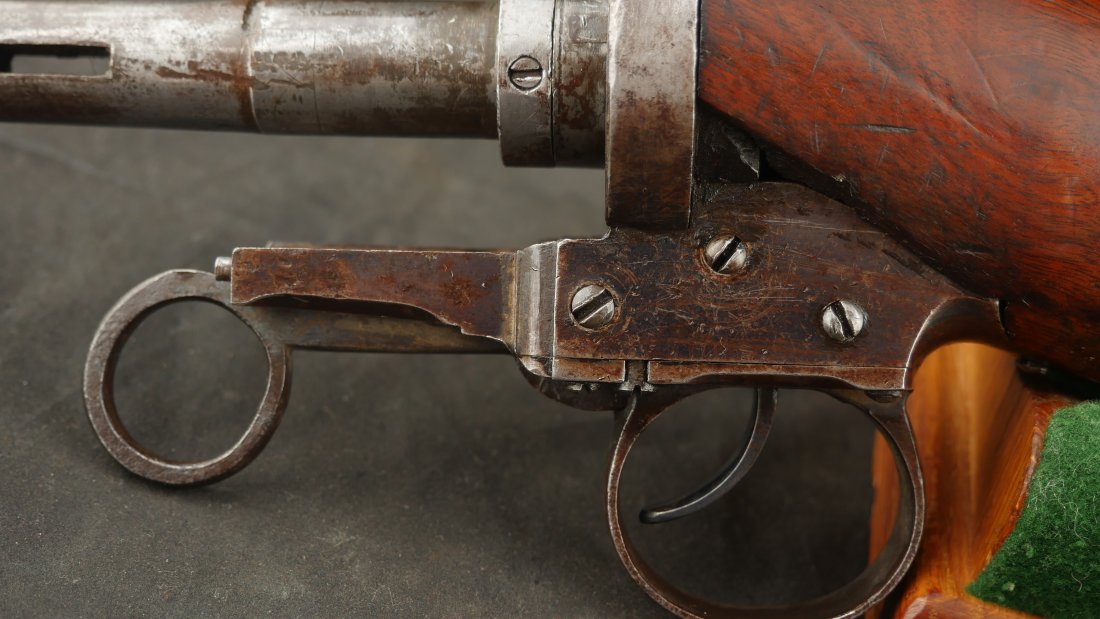
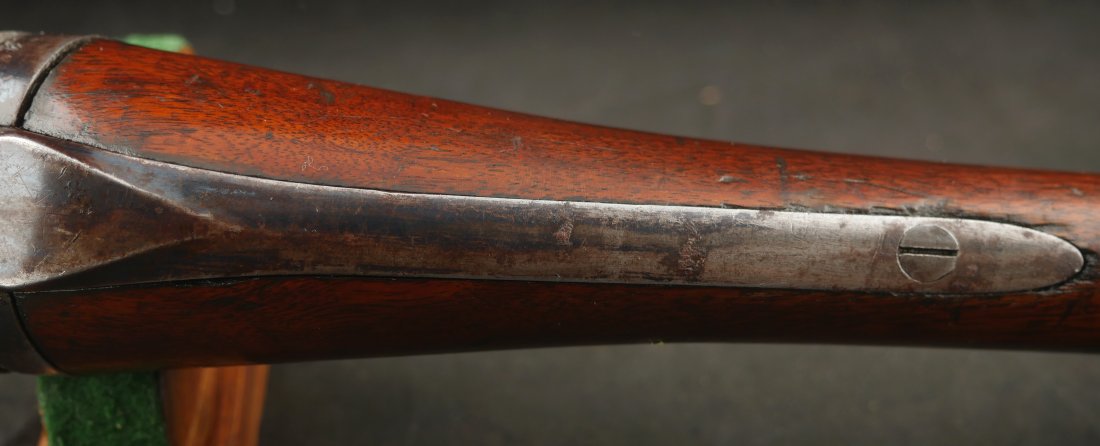
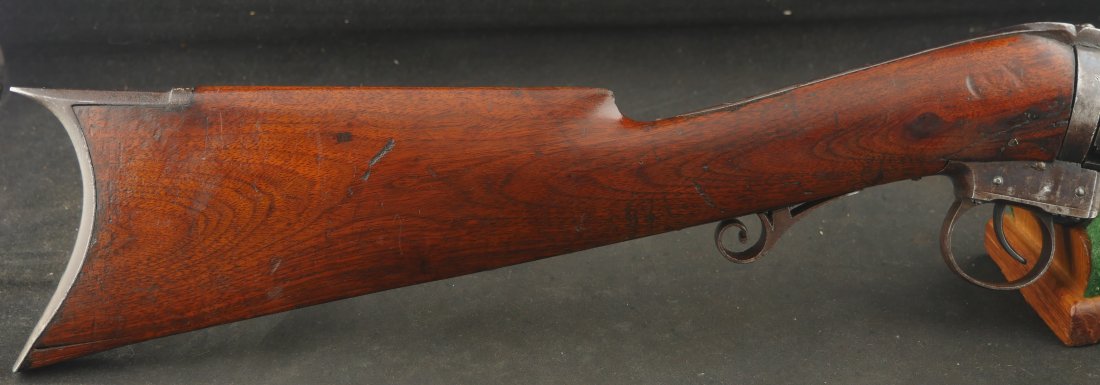
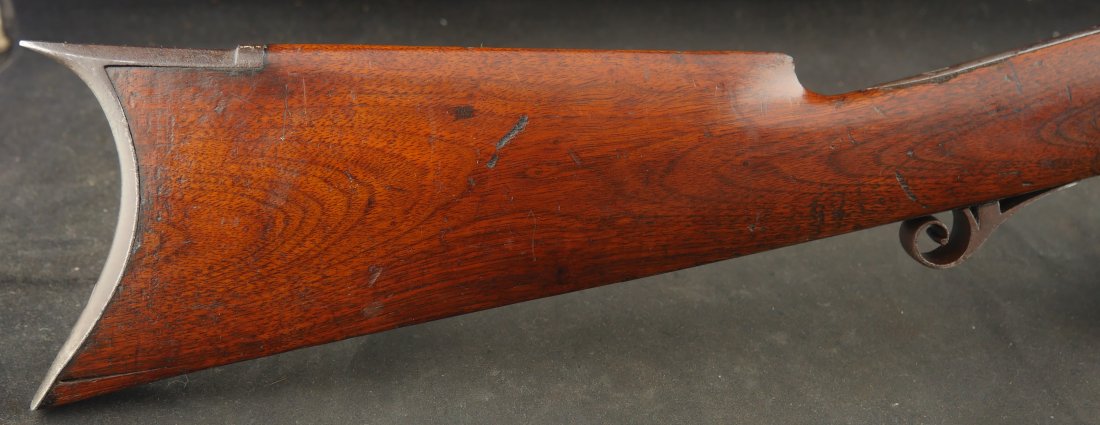
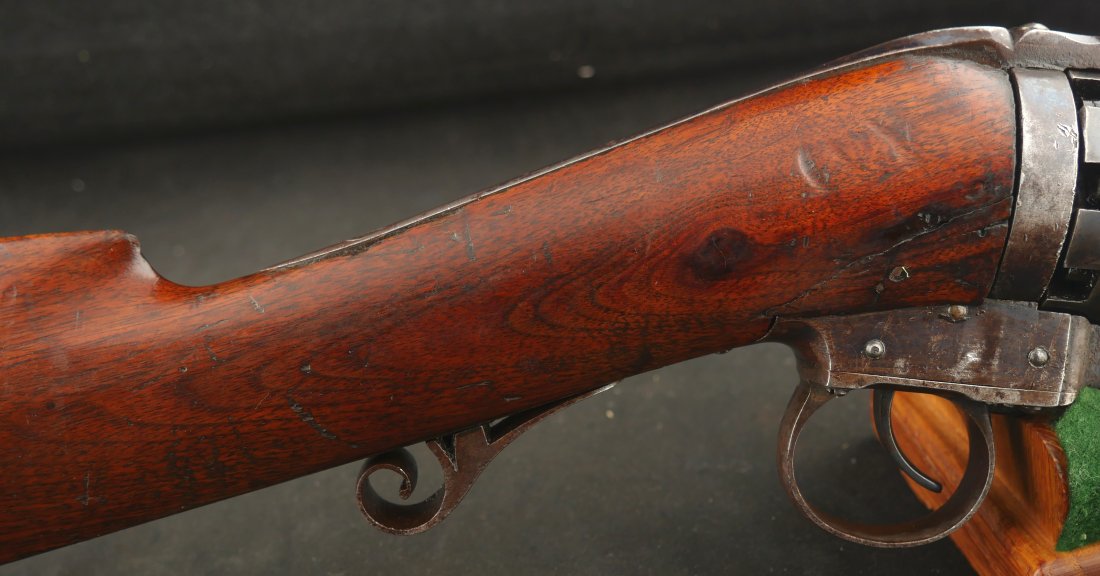
This rifle remains in its standard configuration without the later attached loading lever. It is an exceptionally honest, untouched example showing no evidence of modern restoration, refinishing, excessive cleaning, or alteration.
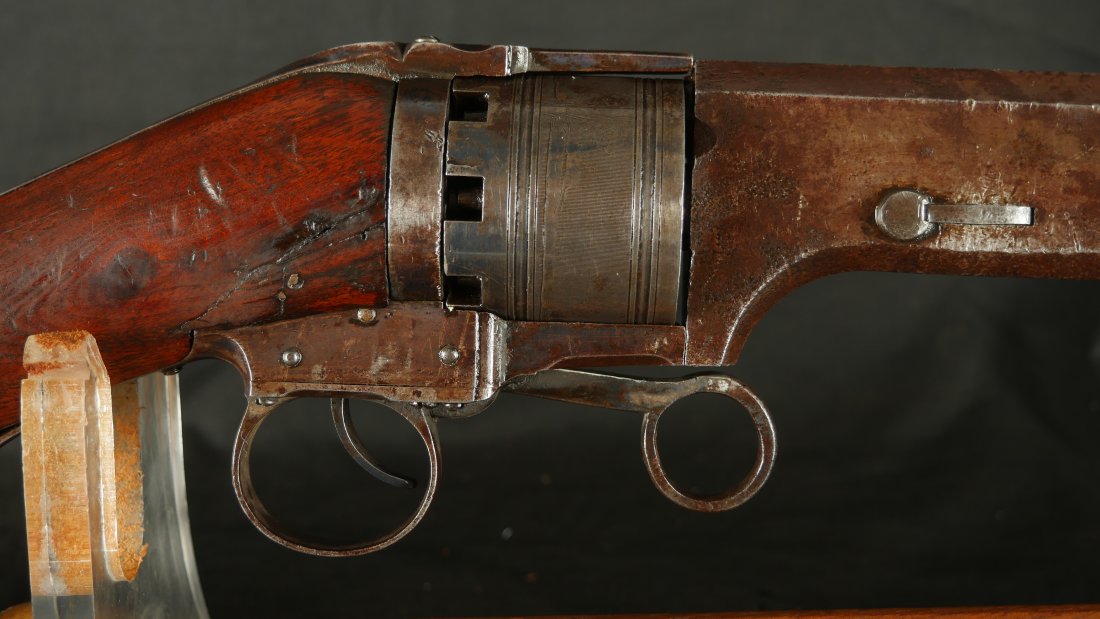
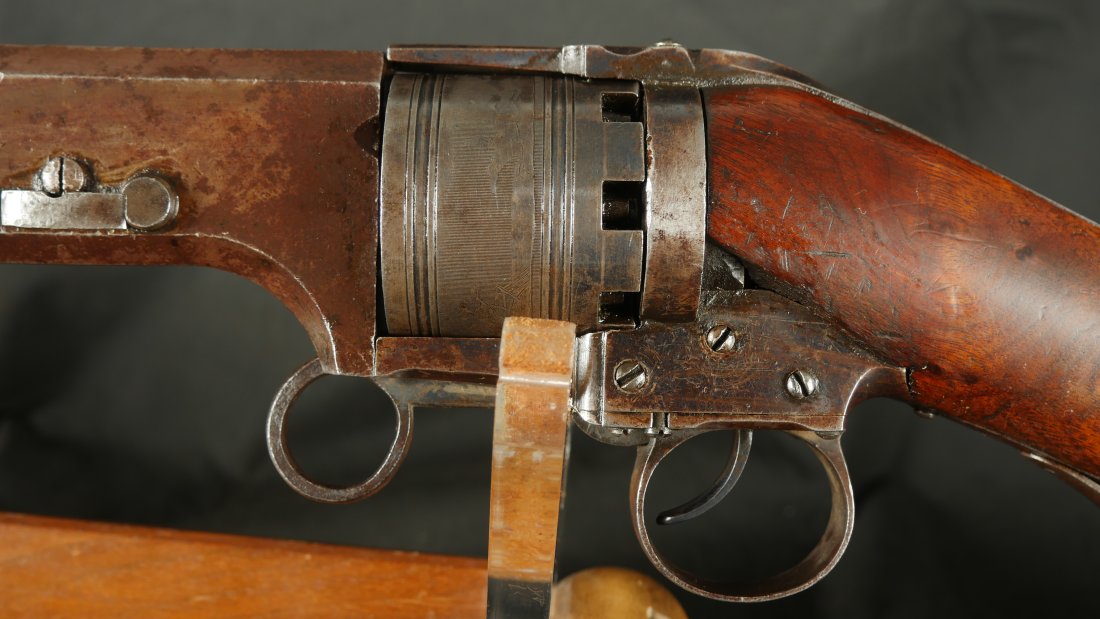
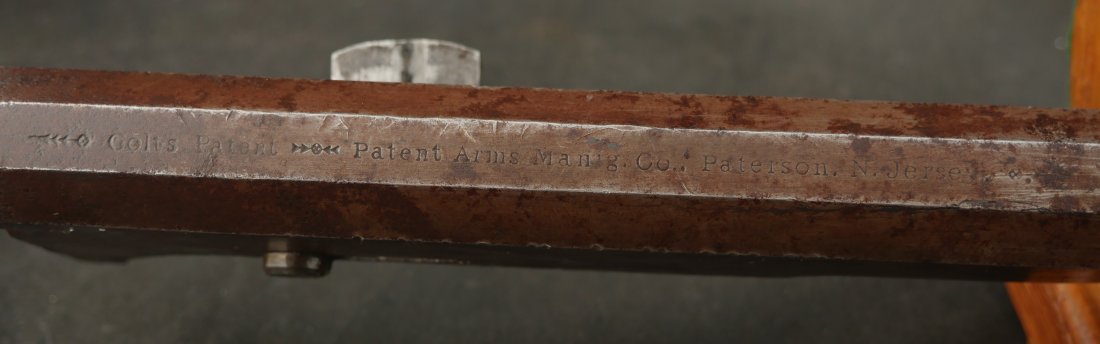
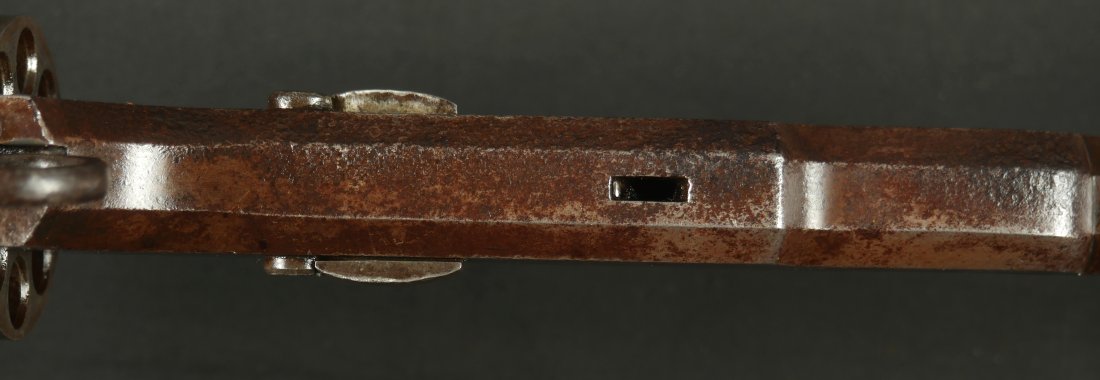
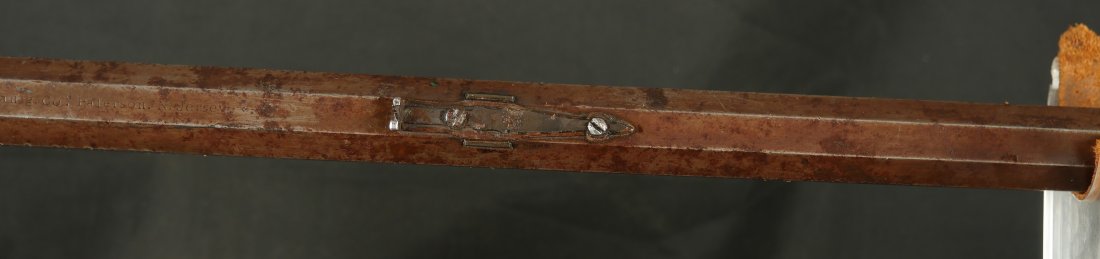
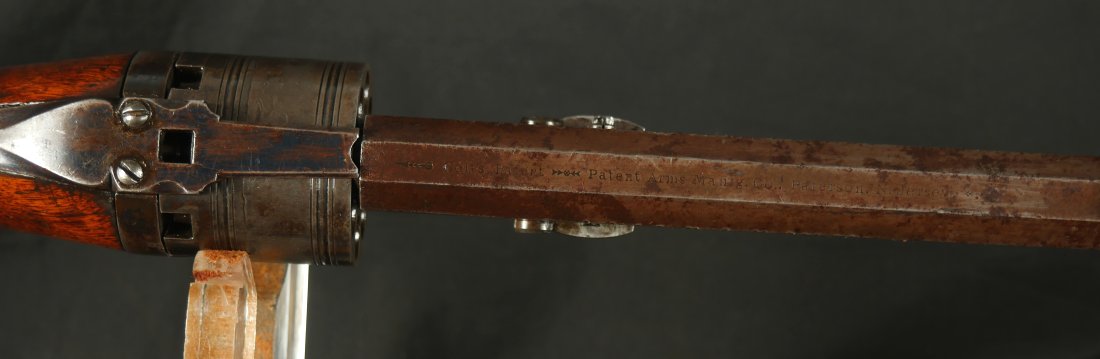
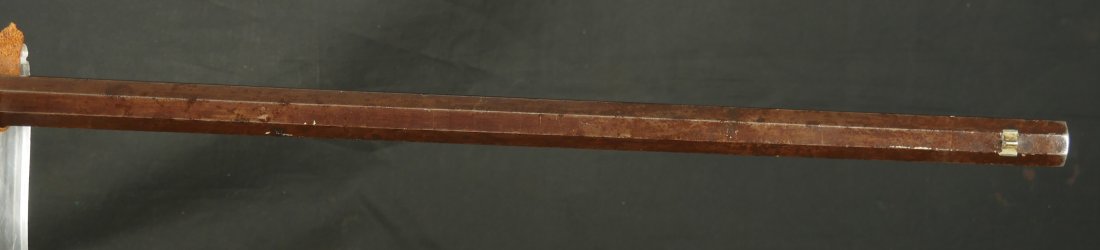
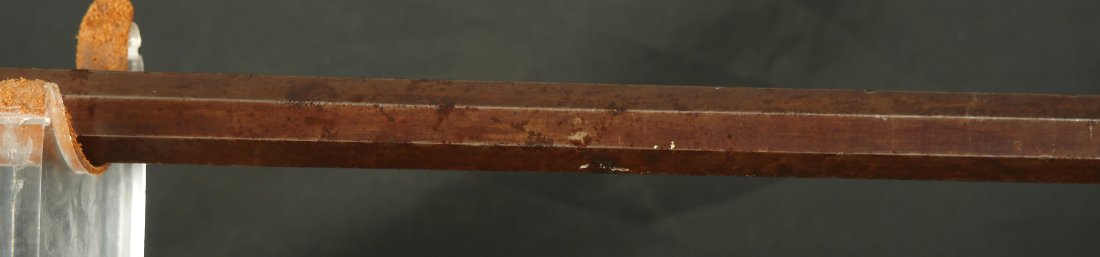
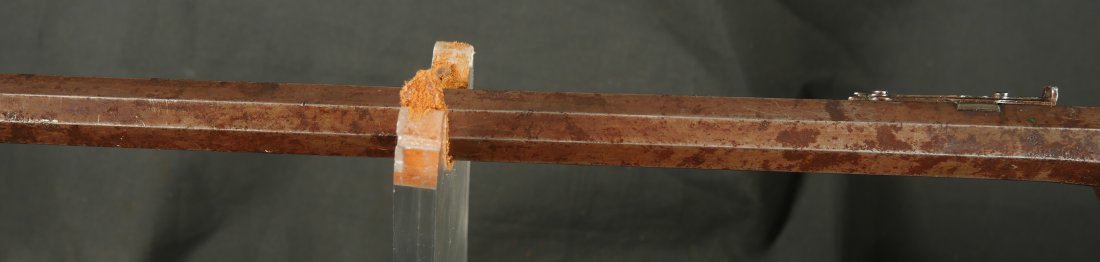
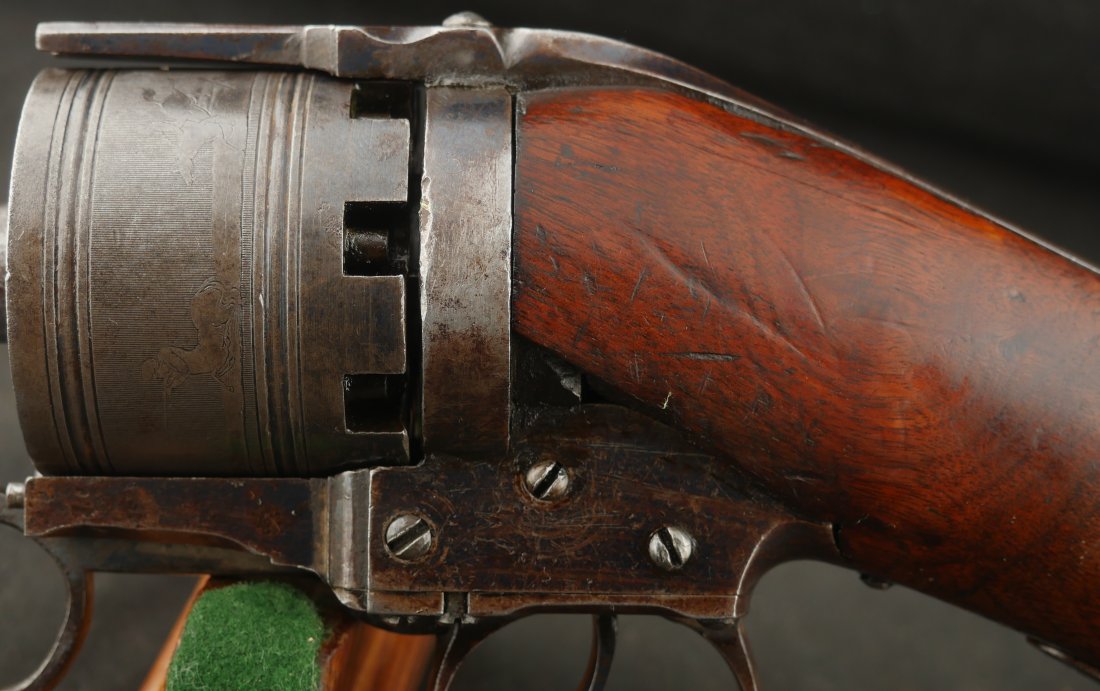
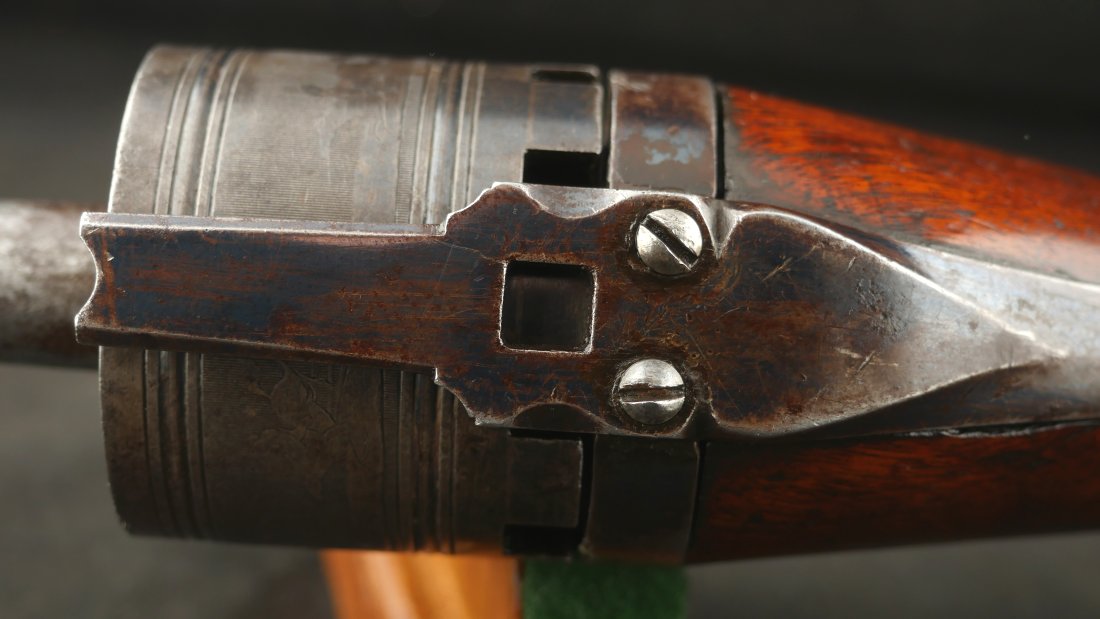
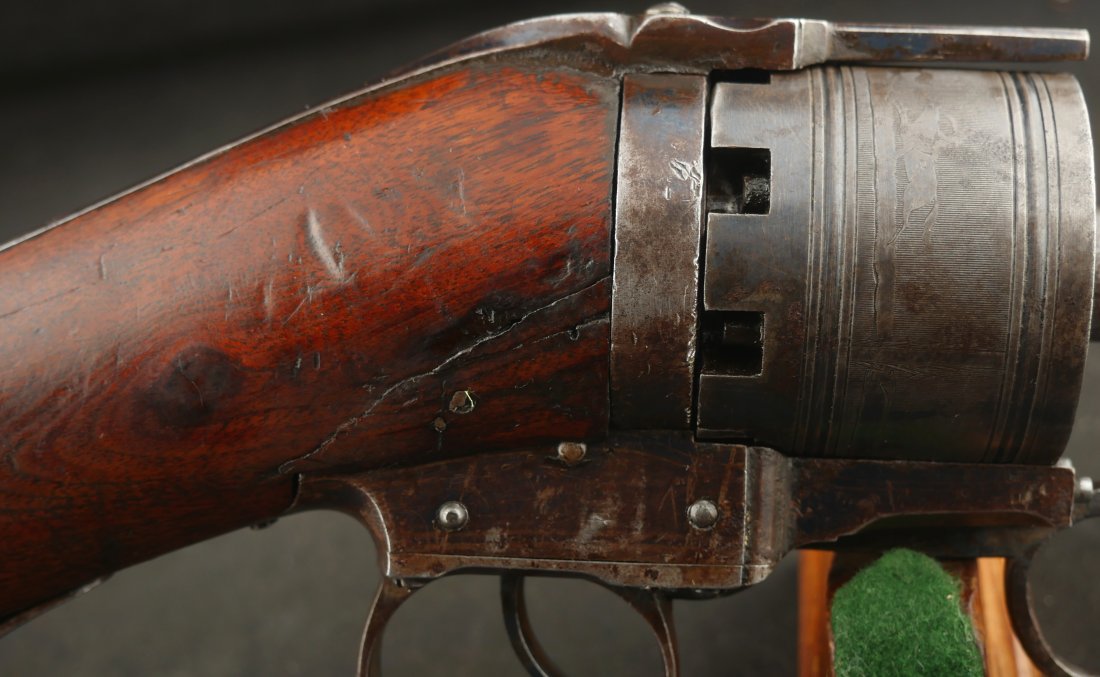
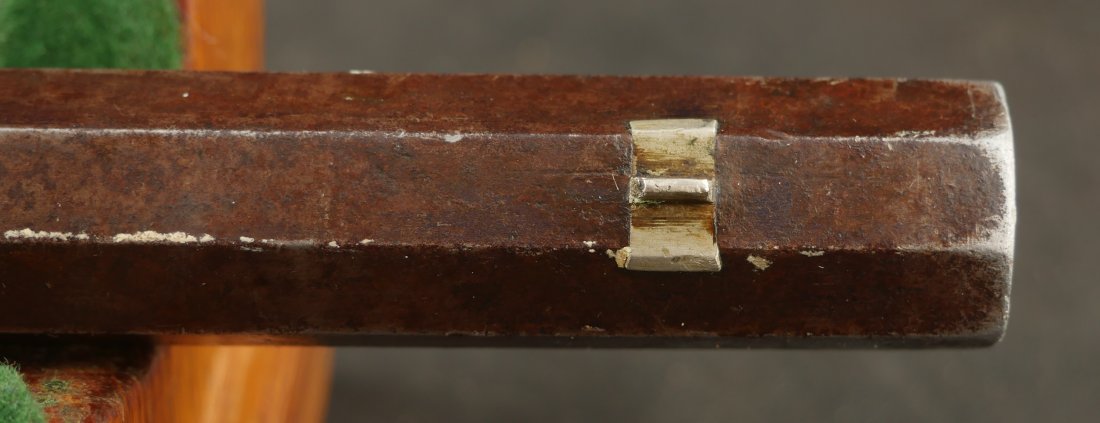
The frame, cylinder, and operating lever retain scattered areas of original blue finish blending naturally into an attractive untouched patina. The barrel retains visible traces of its original brown finish, now mixing with an even chocolate-brown patina developed through nearly two centuries of honest use and careful preservation. There are a few scattered areas of fine pitting, primarily on the underside of the barrel. The barrel address remains crisp, sharp, and completely legible.
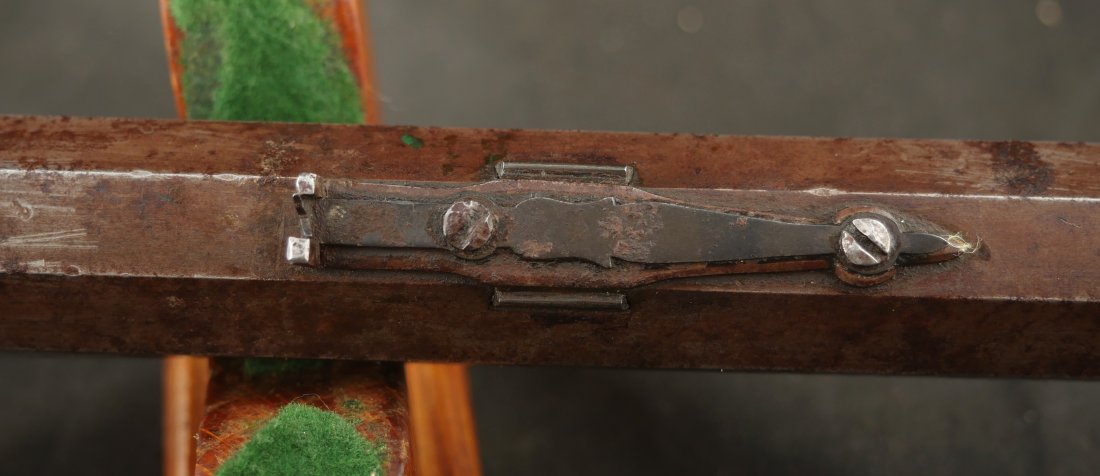
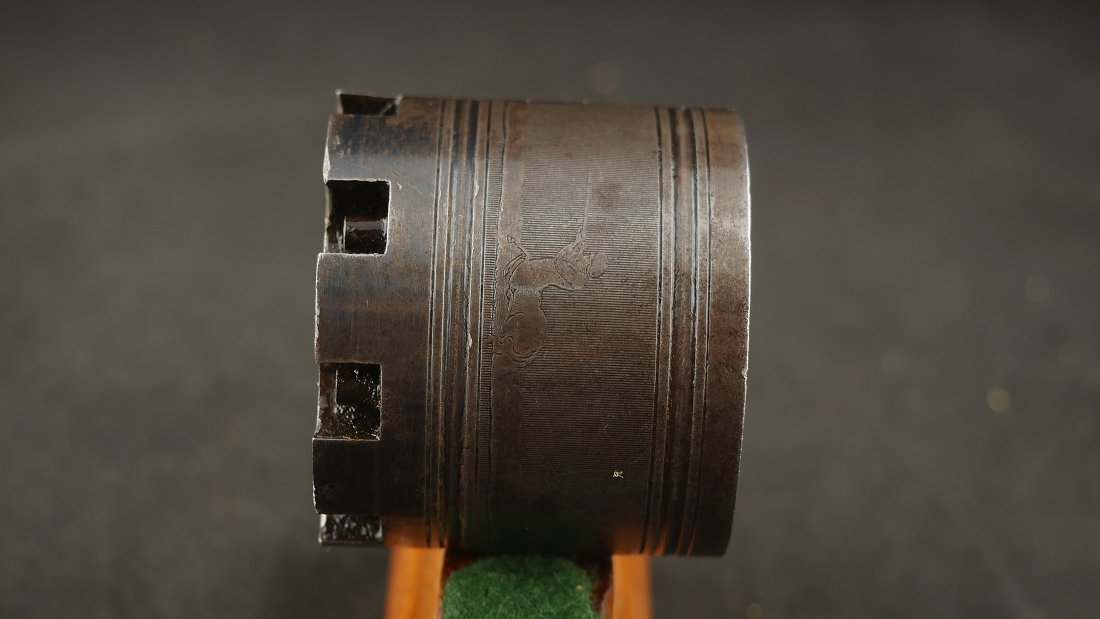
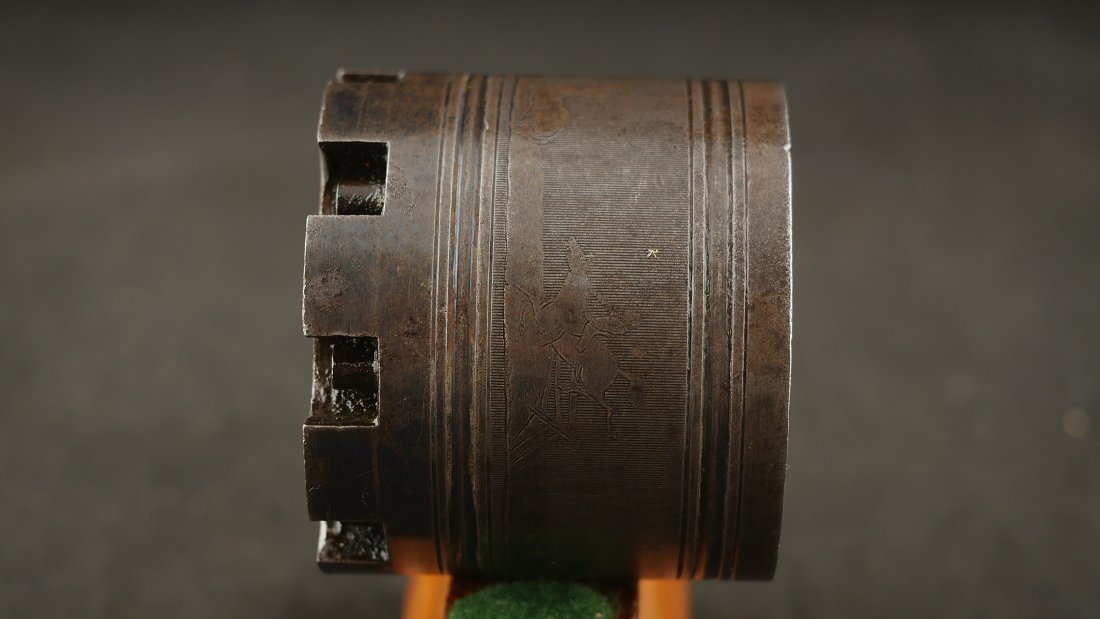
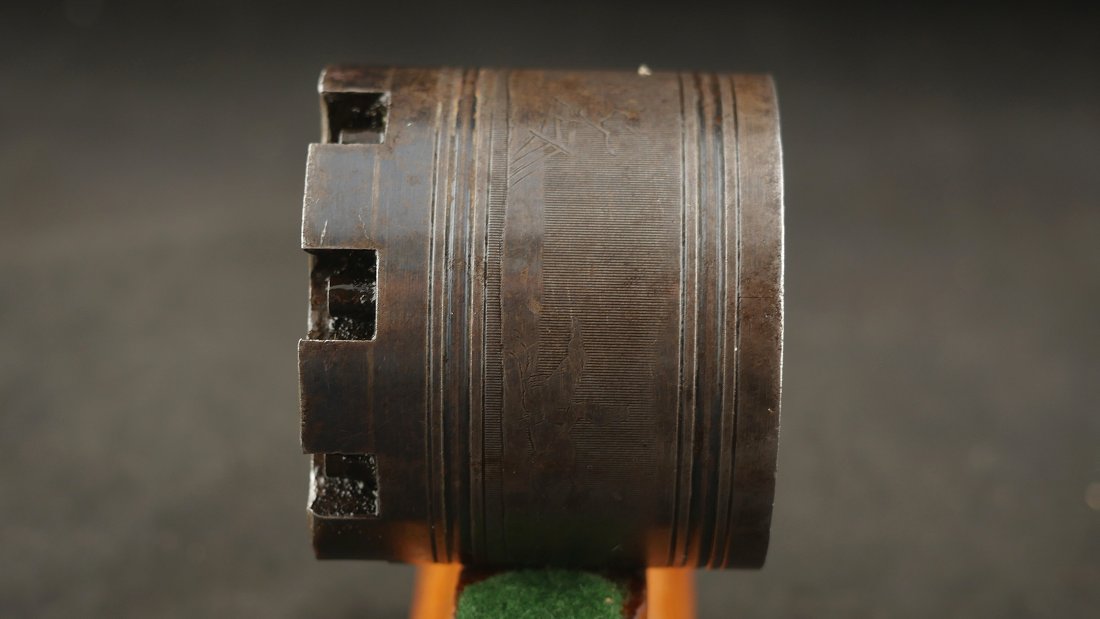
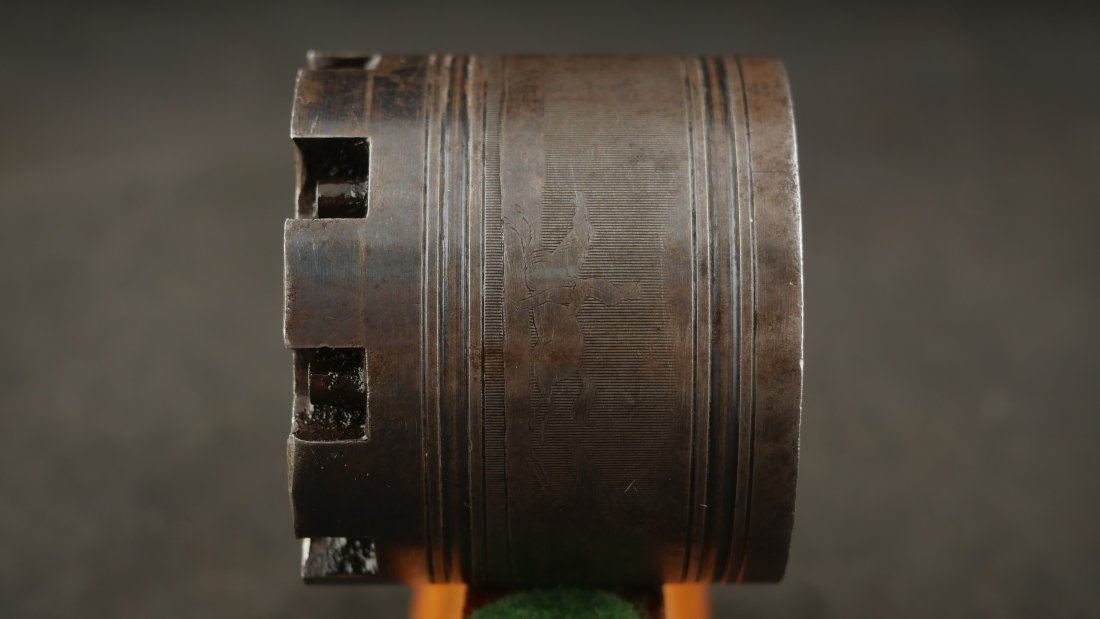
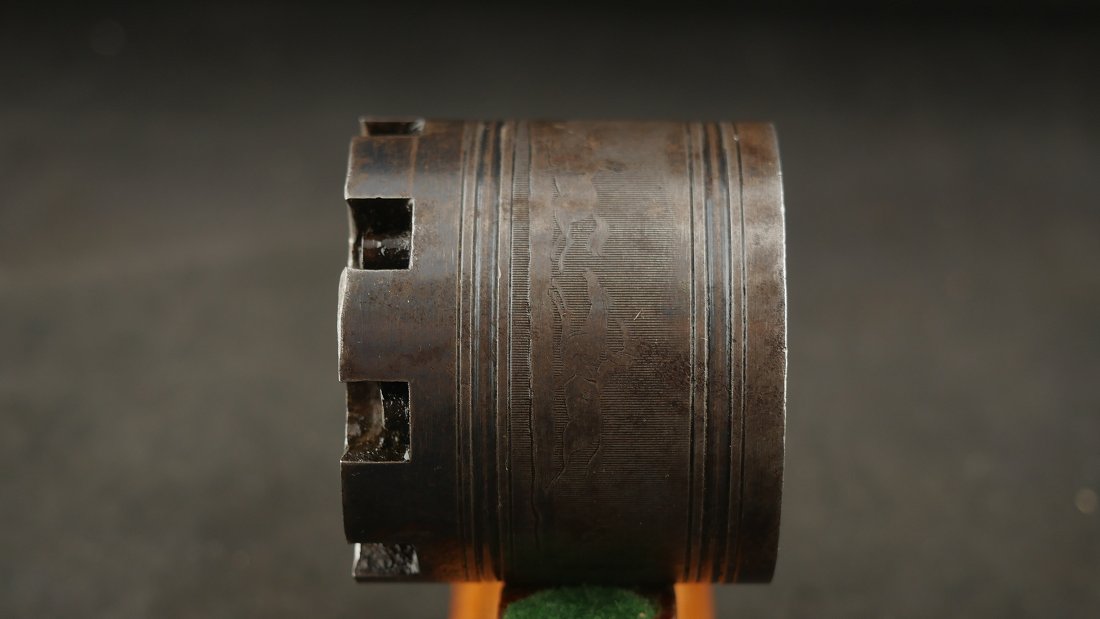
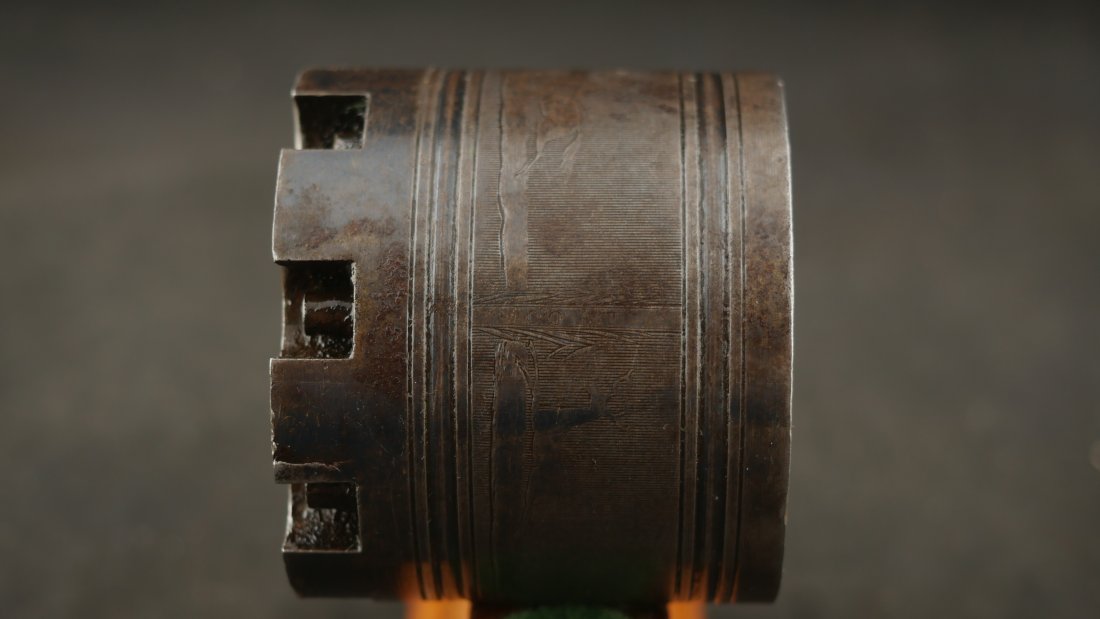
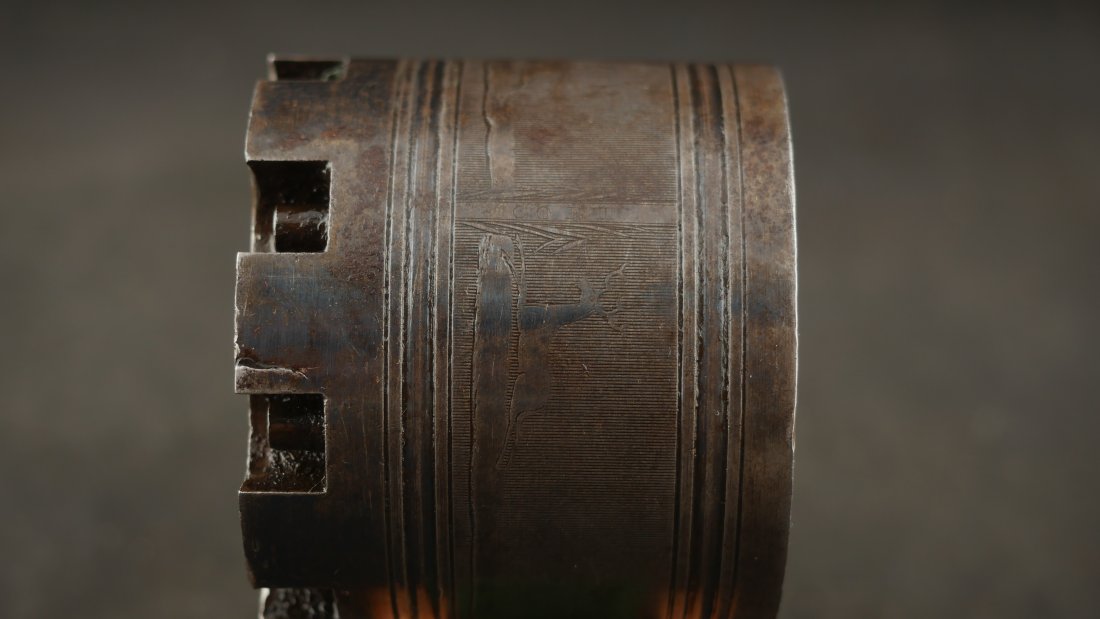
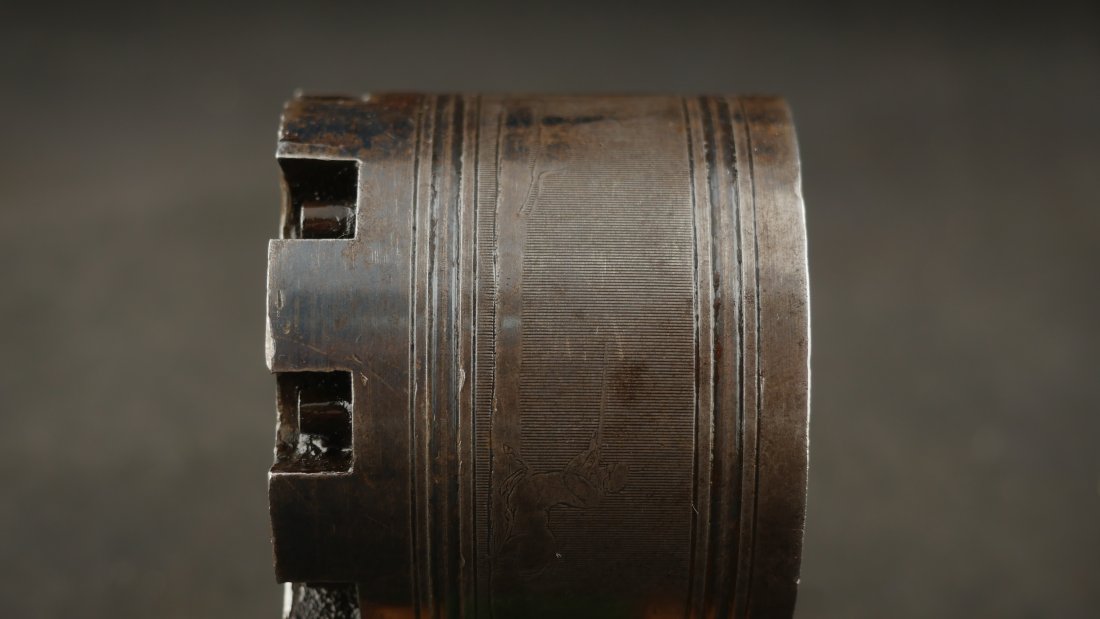
Both the front and rear sights are original. The bore remains bright with strong, well-defined rifling showing only light residue. The cylinder scene is exceptional, retaining approximately 95% or better of the original roll engraving. The horsemen, centaur, and even the delicate stamped “COLT” remain crisp and easily visible—an outstanding feature rarely encountered on surviving Ring Lever rifles.
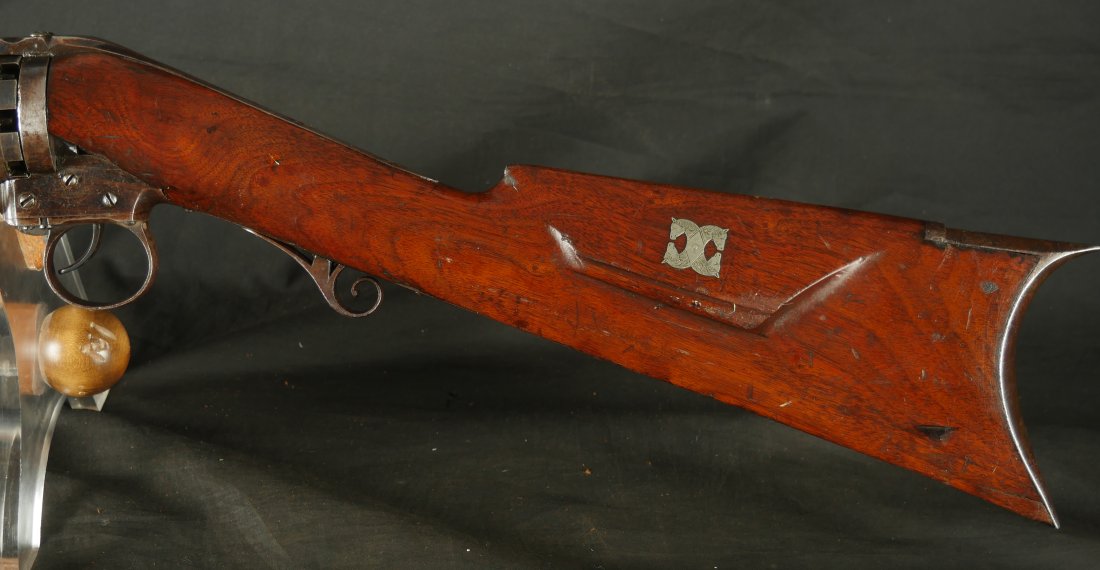
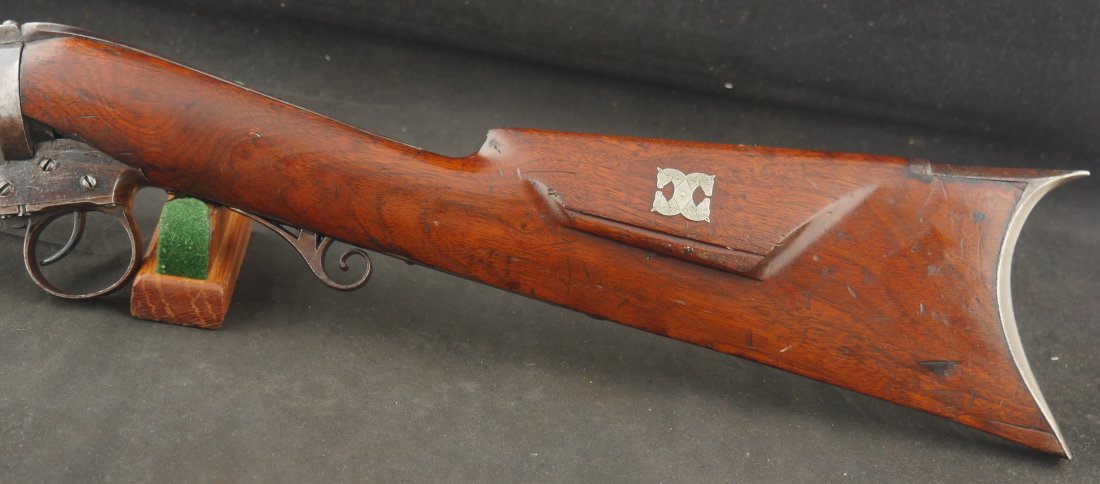
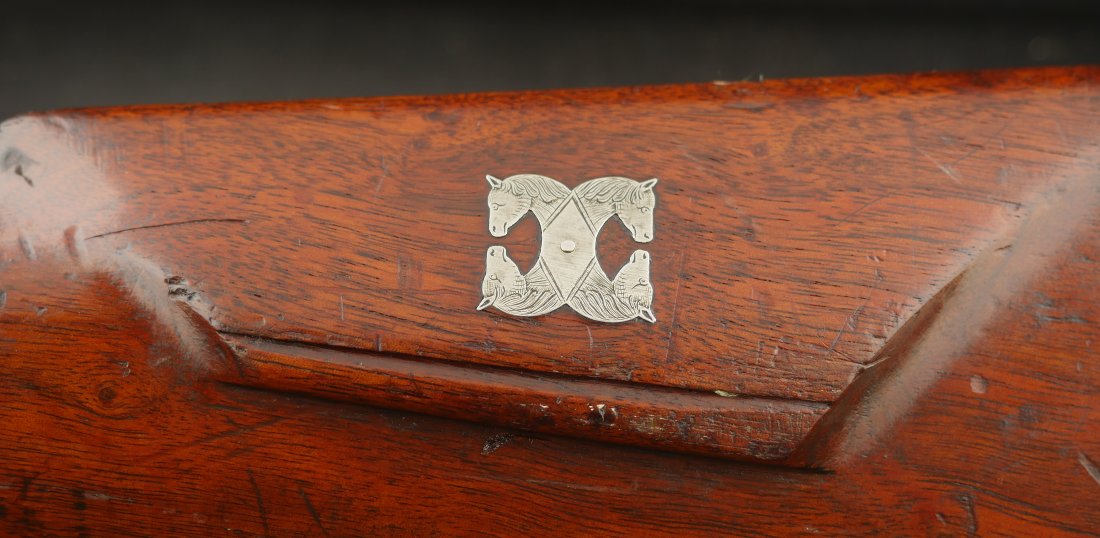
The original walnut stock retains the correct Colt four-horse-head cartouche. Wood-to-metal fit remains excellent throughout. As commonly encountered on these early rifles, there is a small chip at the lower front corner of the left side of the stock where the wood is particularly thin. The opposite side shows an old period repair in the corresponding location. The balance of the stock displays the honest bumps, dings, and handling marks one expects from a frontier firearm that saw actual use rather than careful storage.
The rifle itself is one of the true holy grails of Colt collecting. As exceptional as the firearm is on its own, what truly separates it is the remarkable and well-documented history that accompanies it. It is extraordinarily uncommon to find such an extensive body of research documenting the original owner of an American frontier firearm from the mid-nineteenth century.
Provenance
Exceptional antique firearms become truly extraordinary when they can be associated with a documented historical figure. This First Model Colt Paterson Ring Lever Rifle is accompanied by an extensive collection of family histories, journals, letters, photographs, genealogical research, and historical records identifying it as the rifle of Mormon pioneer, plains freighter, businessman, and civic leader Captain John Hindley (1826–1899).
Among the most significant documents accompanying the rifle is the published Hindley family history, which contains the following statement:
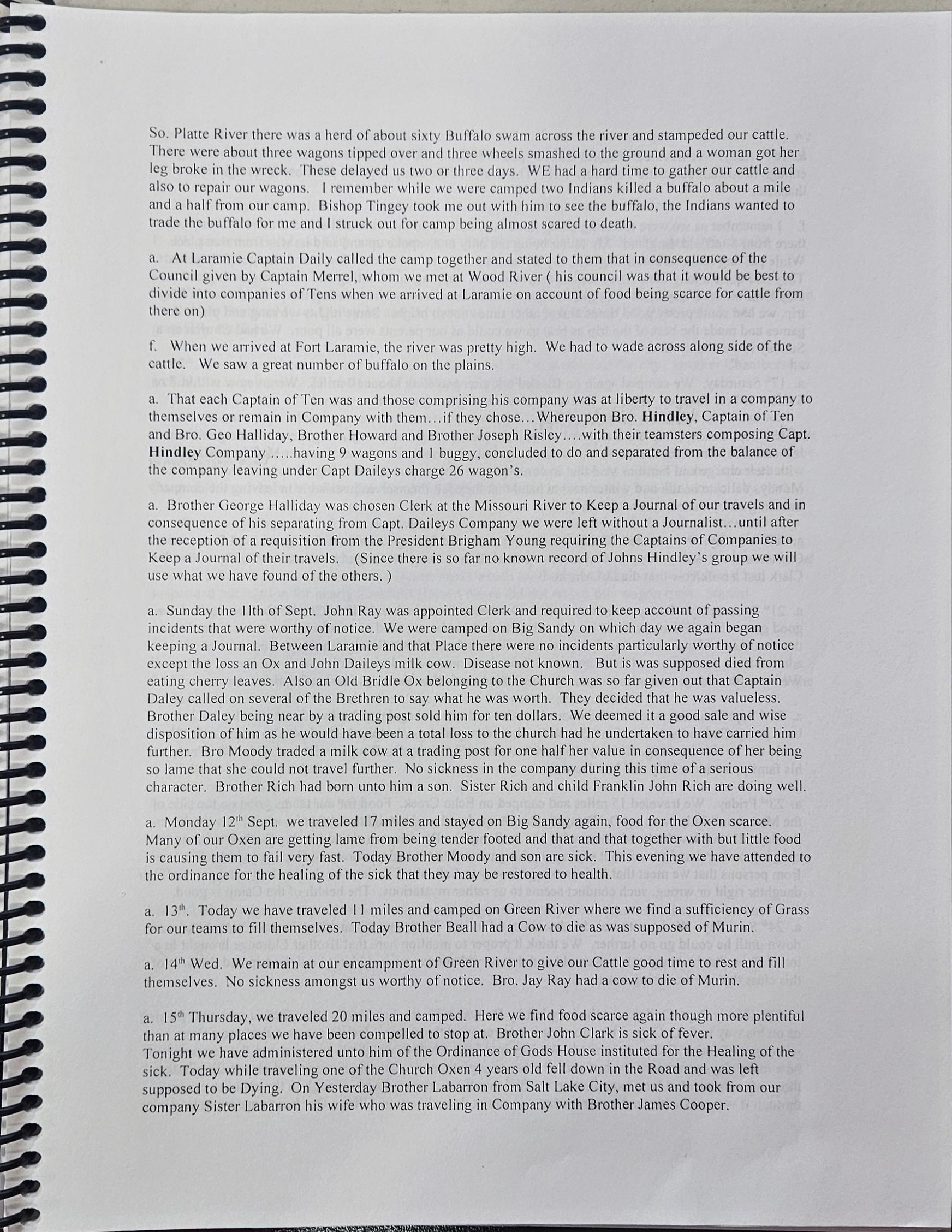
“One experience, handed down within the family, centers on John’s 1839 Colt Paterson ring lever revolving rifle that is still within the family.”
This remarkable passage specifically identifies the firearm as John Hindley’s Colt Paterson Ring Lever Revolving Rifle and confirms that both the rifle and its history were preserved within the Hindley family for generations. Rather than simply referring to “an old rifle” or “John’s gun,” the family history identifies the firearm by its make and model, providing an unusually specific association between the rifle and its original owner.
The family history goes on to recount a long-preserved tradition in which Hindley became separated from his companions during a severe winter blizzard west of Salt Lake City. According to the family account, Hindley used his Colt Paterson rifle to kill a buffalo, dressed the animal, and survived the storm by sheltering inside the carcass until the weather passed. While preserved as a family tradition rather than a documented historical event, the story demonstrates the importance of the rifle within the Hindley family and helps explain why it remained carefully preserved and remembered through successive generations.
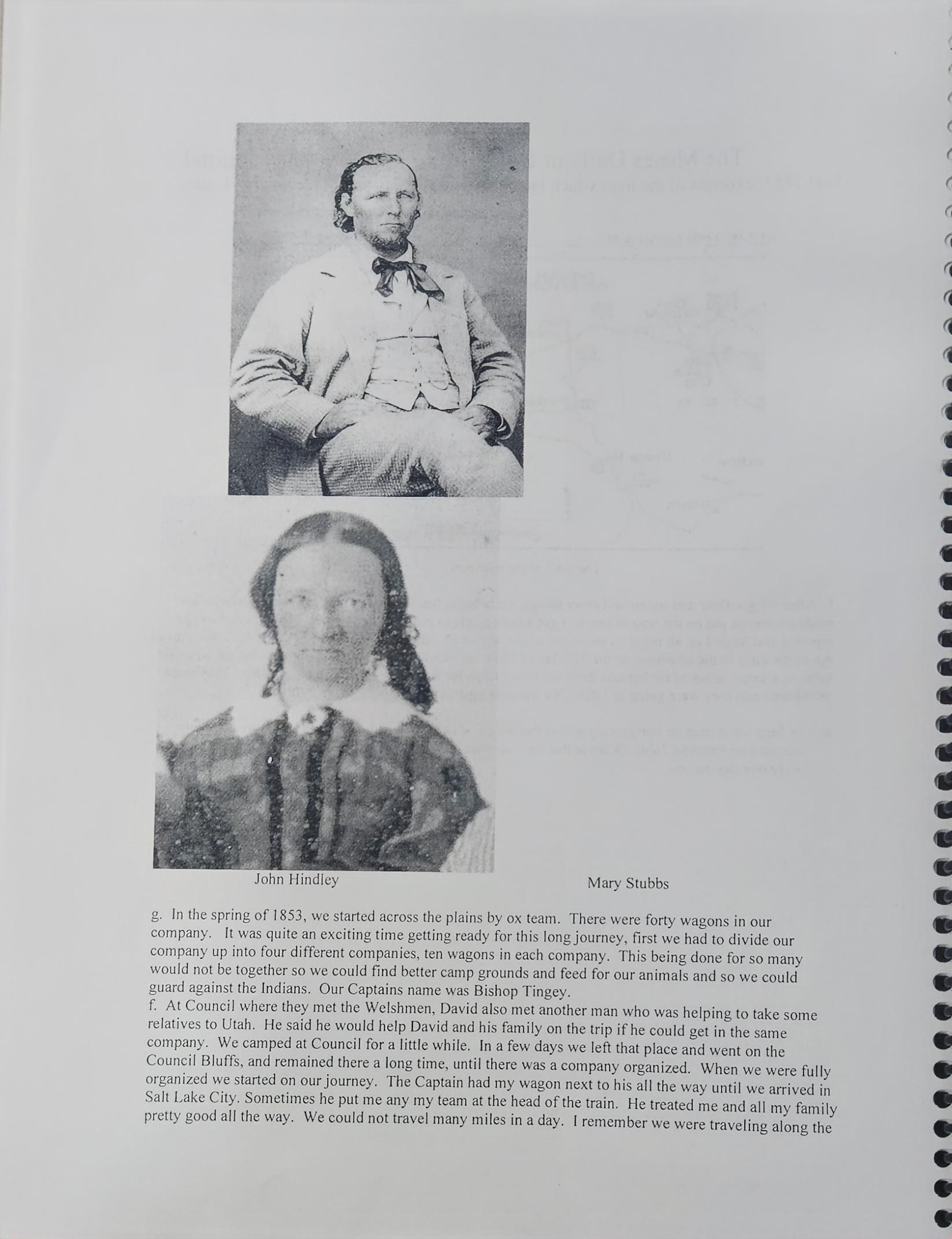
The accompanying family history documents John Hindley’s life in remarkable detail. Born in Tyldesley, Lancashire, England, Hindley apprenticed as a painter before marrying Mary Stubbs in 1839. Both joined The Church of Jesus Christ of Latter-day Saints in 1848, sailed from Liverpool aboard the Berlin in 1849, and settled temporarily in St. Louis while preparing to journey west.
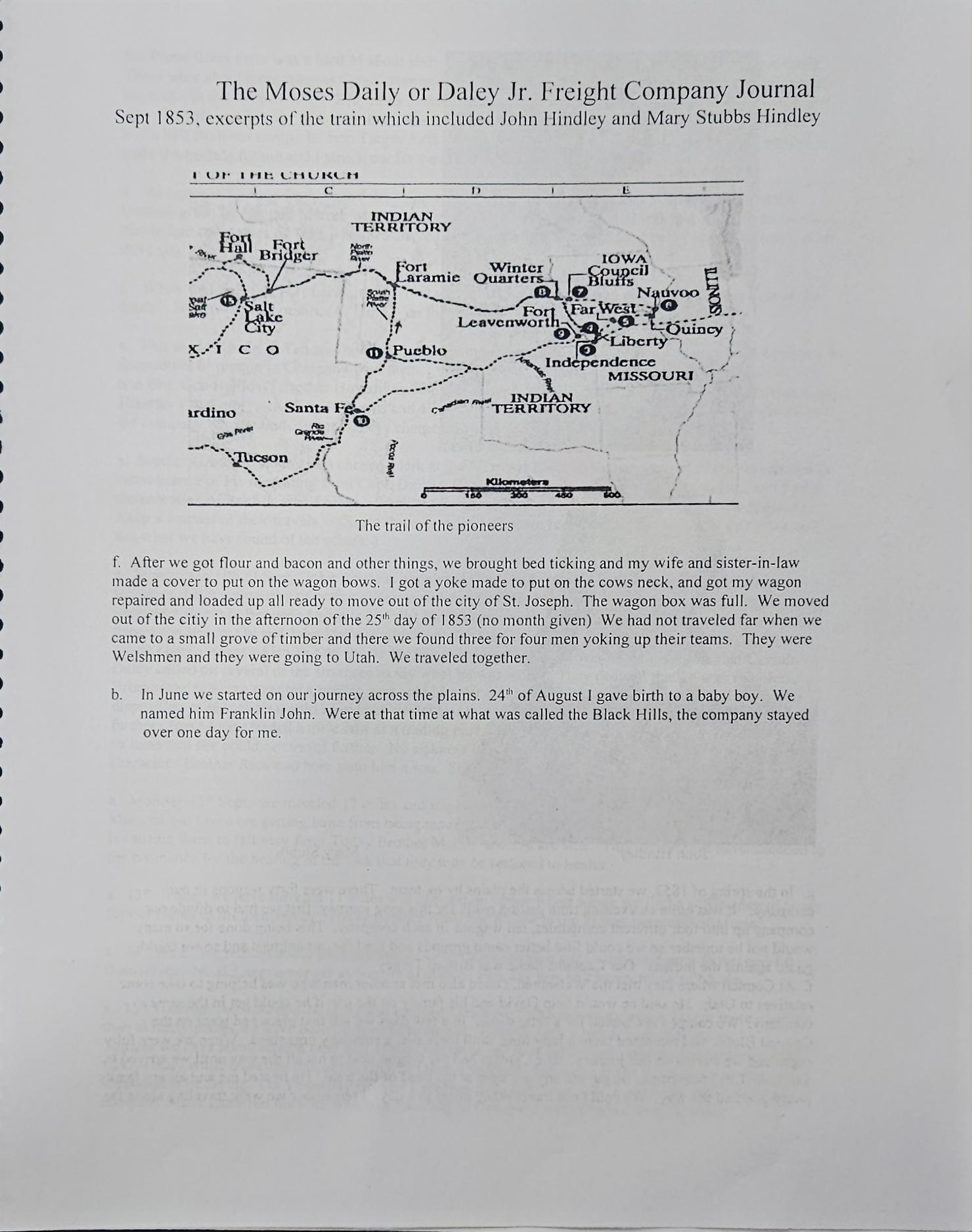
In 1855, Hindley served as captain of an emigrant company consisting of 206 emigrants, 46 wagons, 226 oxen, 54 cows, 14 horses, and four mules, successfully leading the company from Mormon Grove near Atchison, Kansas, to Salt Lake City. The journals accompanying the family history repeatedly describe the realities of frontier travel, including armed front and rear guards, emigrants traveling with loaded rifles, buffalo herds along the trail, and the constant need to remain prepared for danger. While these journals do not specifically identify Hindley’s Colt Paterson rifle, they provide valuable historical context illustrating the everyday reliance upon firearms during the overland migration.
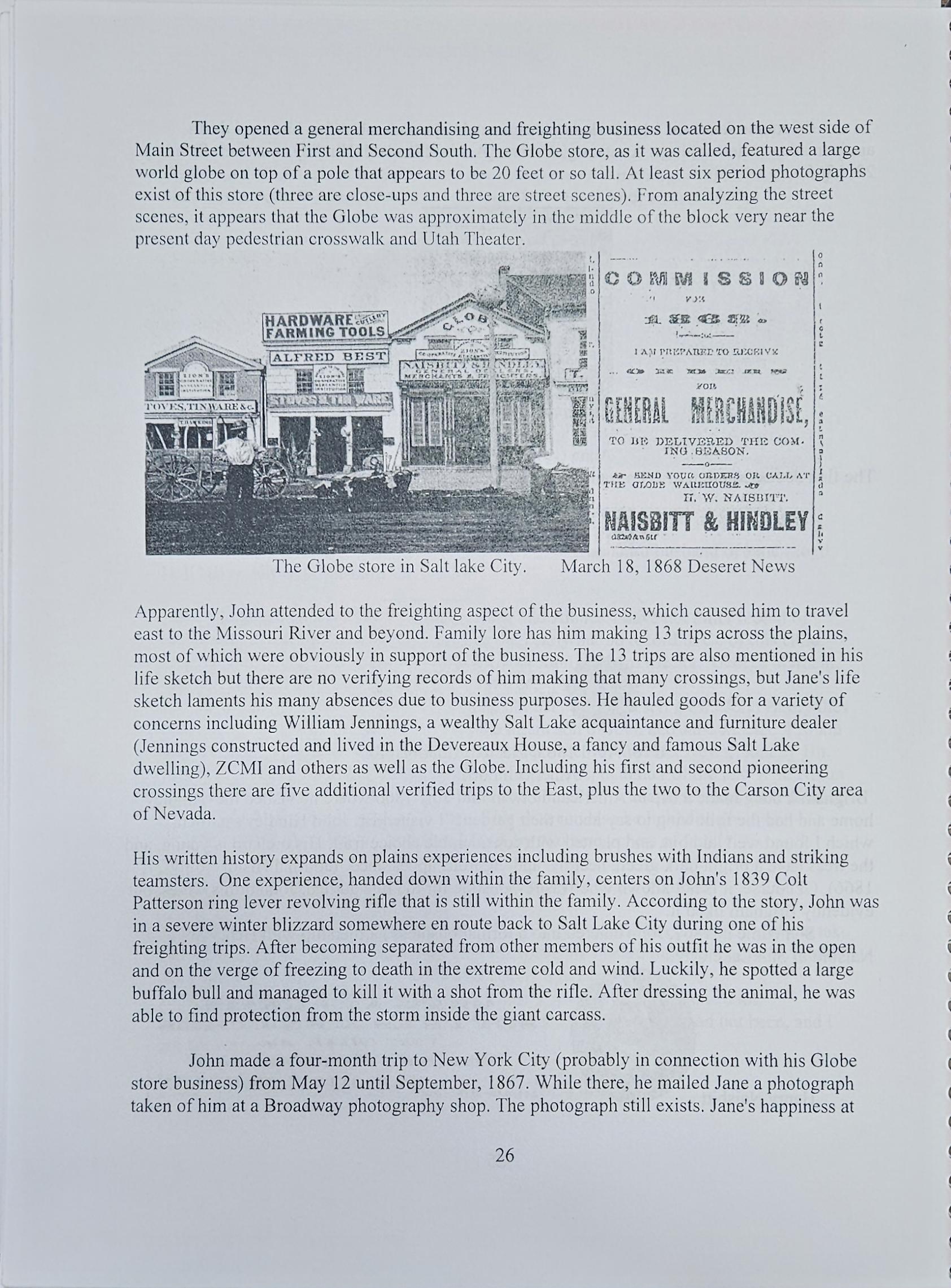
Following his arrival in Utah, Hindley became one of the leading citizens of American Fork. Over the following decades he served as an Alderman, Justice of the Peace, merchant, farmer, businessman, church leader, and partner in the Salt Lake City mercantile firm of Naisbitt & Hindley, operators of the Globe Store. His business frequently required long freight trips across the plains, and family records indicate he made approximately thirteen overland journeys during his lifetime.
Additional family documentation records Hindley’s association with Fort Floyd during the Johnston’s Army occupation. Family artifacts preserved through generations include military relics reportedly obtained from soldiers stationed at the fort, further demonstrating the family’s long tradition of preserving historically significant heirlooms connected to John Hindley’s life.
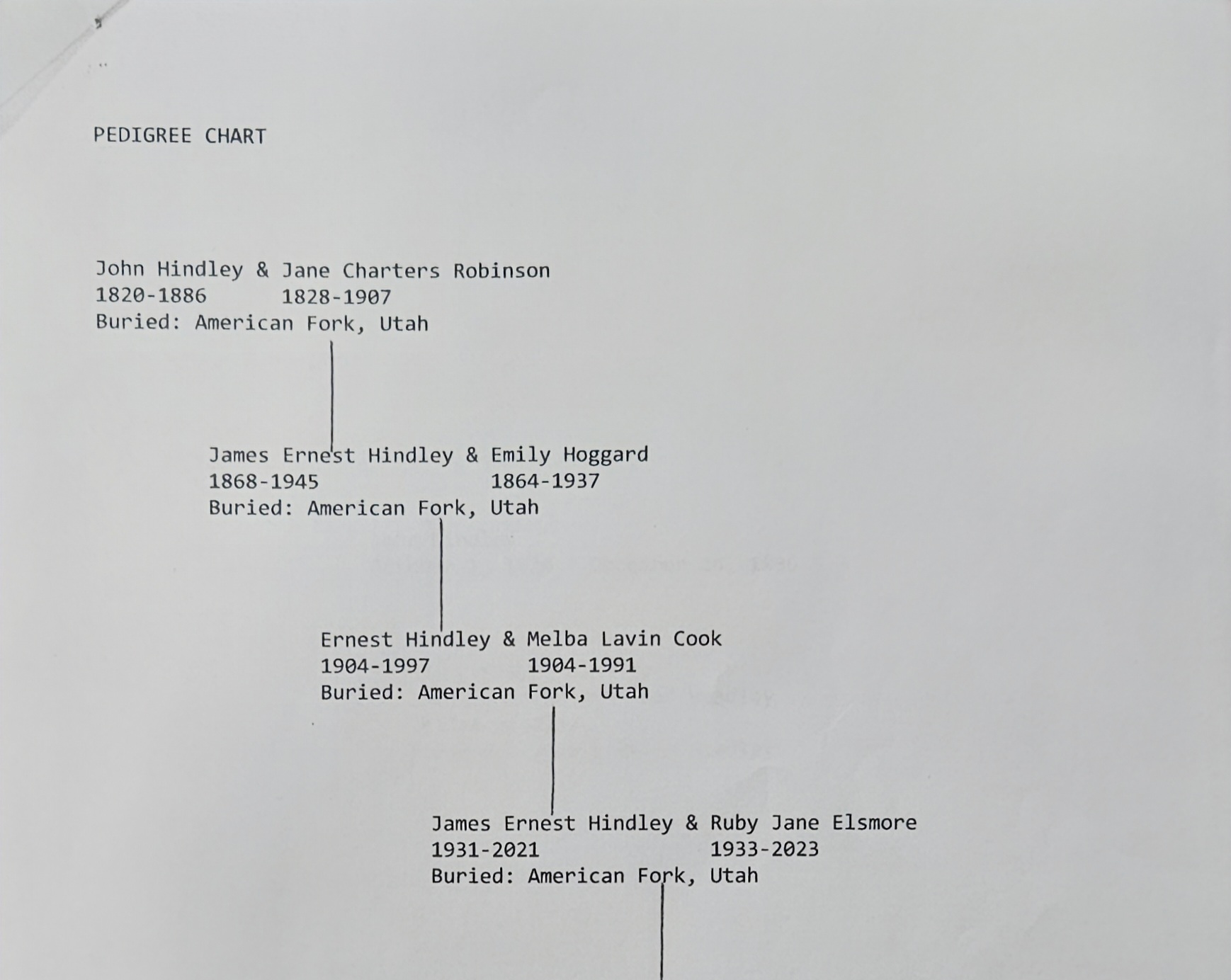
Together, these journals, family histories, genealogical records, public records, land patents, newspaper accounts, and longstanding family traditions create a compelling and unusually detailed provenance for one of Samuel Colt’s rarest firearms. While no contemporary purchase receipt or estate inventory identifying the rifle has yet been located, the surviving documentation provides a rare and credible historical association linking this exceptional Colt Paterson Ring Lever Rifle to one of Utah’s early pioneer leaders and the settlement of the American West.
Included with the rifle:
- 2021 written appraisal valuing the firearm at $100,000.
- Notarized affidavit from John Hindley’s great-great-granddaughter attesting to the rifle’s family provenance.
- Extensively researched Hindley family history compiled from journals, letters, photographs, genealogical research, and historical records documenting John Hindley’s life and the family’s longstanding association with the rifle.
Estimated Retail Value: $100,000
In stock
Only logged in customers who have purchased this product may leave a review.
Shipping Policy
PLEASE READ
We accept Check, Money Order, Credit Card, Wire, etc.
If you send a Cashier’s Check or Money order, items will get shipped immediately. If you send a personal check, we will wait for the check to clear before shipping. Please send an invoice with payment, it makes it easier to keep track of payments that way. Also, please be sure your shipping address is correct.
CREDIT CARD FEES: Domestic: 3.5%. International: 6.0%
WIRES: If sending a wire add $30
INSURANCE: We will only insure through the mail carrier when specifically asked to.
Shipping does not include insurance through courier. We carry our own insurance but there is a $1000 deductible. If you would like your box insured through the shipping company, the cost is $10 and you add an additional $1 for every hundred dollars’ worth of insurance that you want. $1000 insured value = $20. We do our best to package items as secure as we can, in the previous 6 years we have had 3 guns broken (all 3 were muskets) and we have shipped thousands of guns. USPS is difficult to get money out of even if you do insure through the USPS.
Cost: US $1 per $100 in value, plus $10. Ex. $1500 Insurance = $15 + $10 = $25
SHIPPING:
If you have purchased more than 1 item and want combined shipping. Please contact us.
If we are shipping internationally, we will need to give you a shipping cost.
Contact us if you have any questions in regards to shipping.
Send Invoice or Order Form with Payment.
Send the attached invoice or fill out an order form to send with payment. Order Form: Download the form here
Make payment out to Rob Robles and ship to, PO Box 1218, Salem, Utah, 84653, USA.
YOU MUST USE INVENTORY NUMBER IN ALL REFERENCES TO ITEM, (EX: 079-7654, Colt M-1860 Army…)
Be sure your shipping address is correct.
Cancellation / Return / Exchange Policy
RETURN POLICY
Money back, less cost to ship, if not satisfied. All sales are allowed a 3-5 business day inspection. Please contact us to make arrangements before shipping any item back for refund. No refund is due until I have received the item and it has been inspected.
You are responsible to send a copy of the invoice or Order Form with a return. This is your receipt, you must send it with the item being returned. Once the item being returned has been received, and inspected, and found not to be altered, your refund will be processed.
Please let us know if you have any questions or if there is anything we can do for you.
Thank you for your business.
Rob and Griff
Reviews
There are no reviews yet.