This firearm was discovered here in Utah, and its history aligns closely with the events that unfolded in the territory during the mid-1860s. The only known military records from this period linking the Openshaw name to armed service are those of four men who participated in the Utah Black Hawk War.
With documented evidence that the U.S. government supplied arms to the Utah Territorial Militia, there is a compelling likelihood that this gun was carried by one of the Openshaw men while serving in the militia in 1866. During this turbulent period, these “Mormon” militia members were actively engaged in protecting settlements and responding to hostilities throughout central Utah.
Taken together—the Utah origin of the firearm, the period military records, and the government issuance of arms to the territorial militia—this piece represents a tangible connection to one of the most violent and consequential conflicts in Utah’s early history.
What follows is a detailed review of the historical records associated with the Openshaw name during this time.
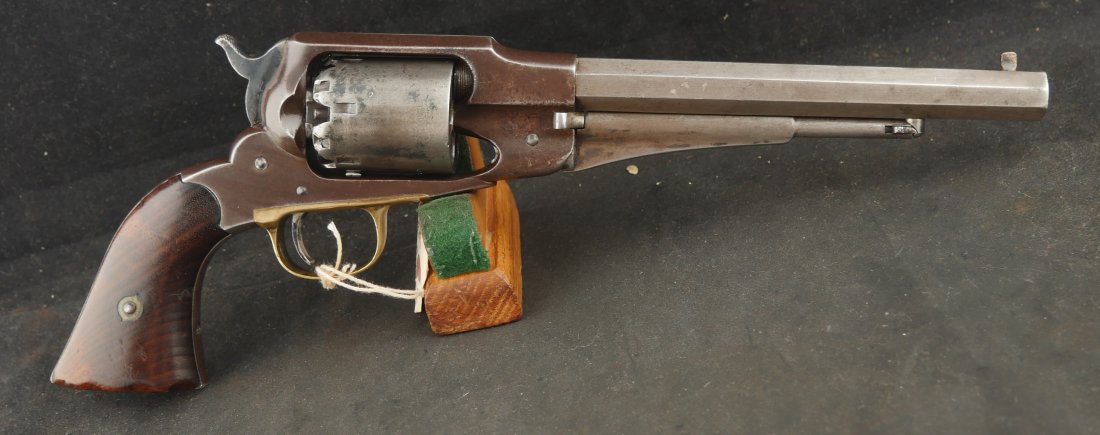
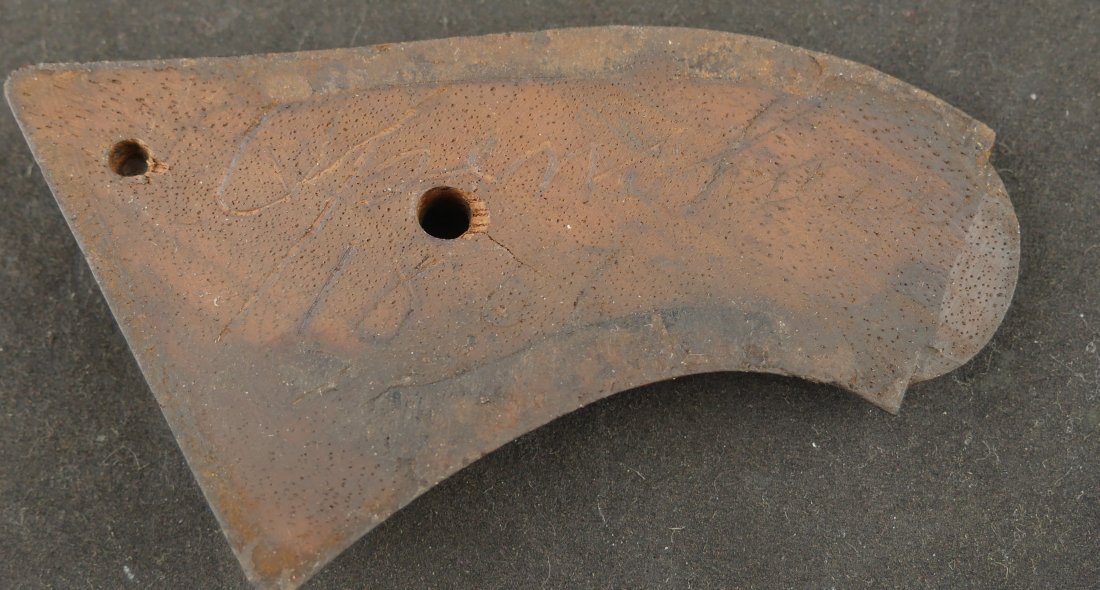
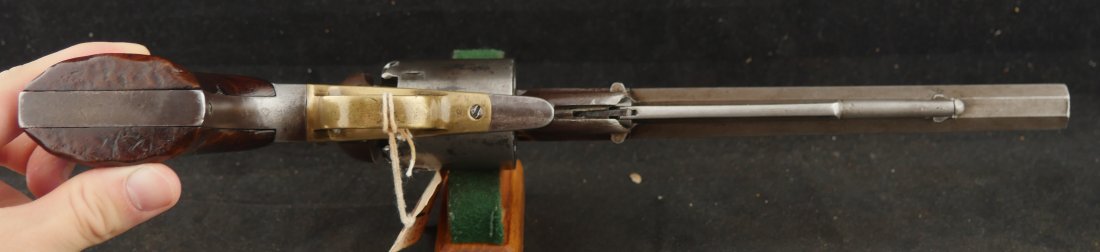
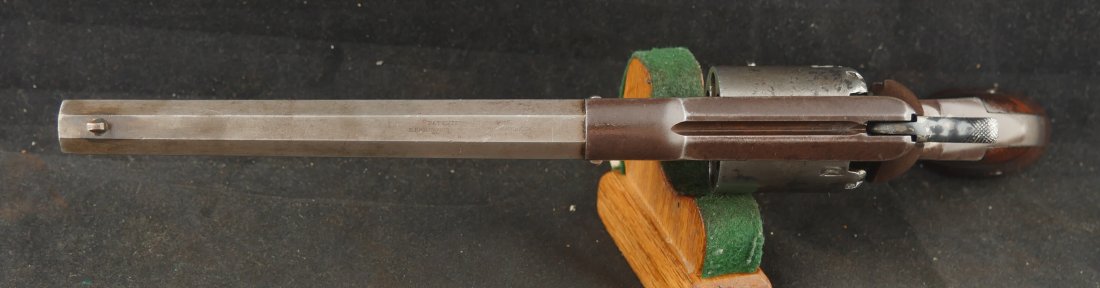
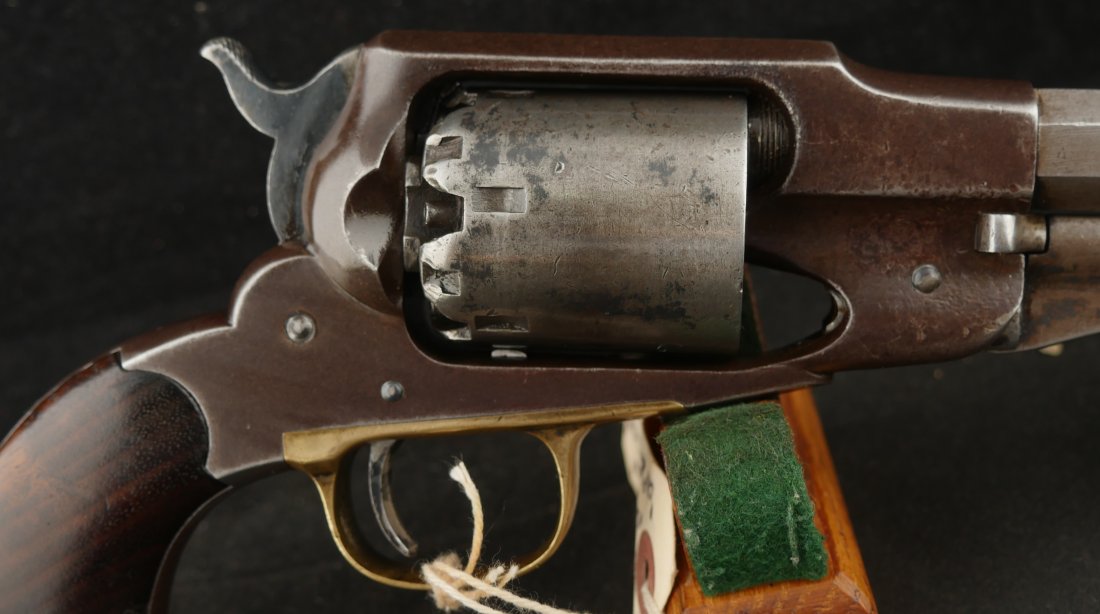
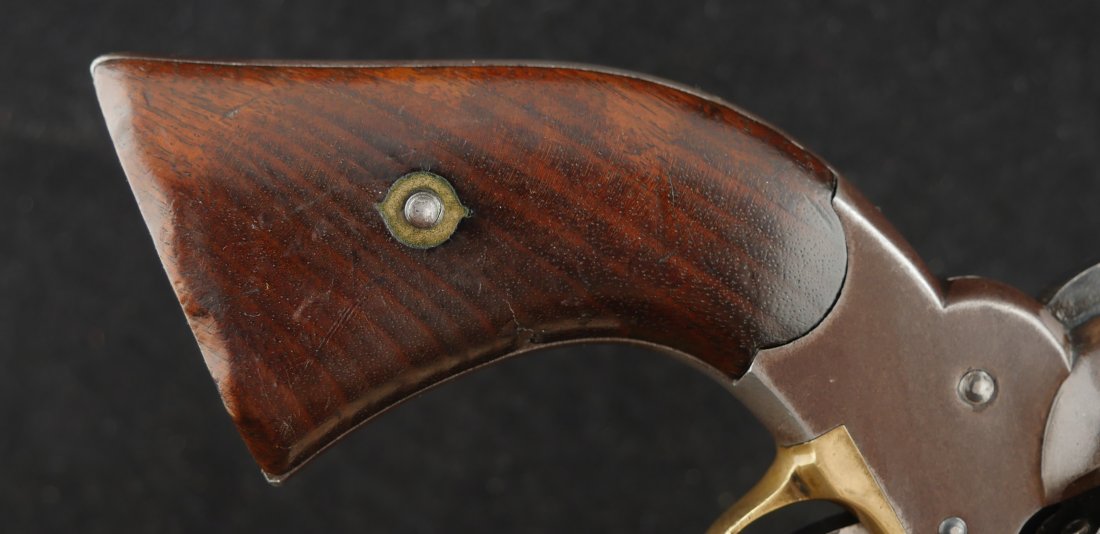
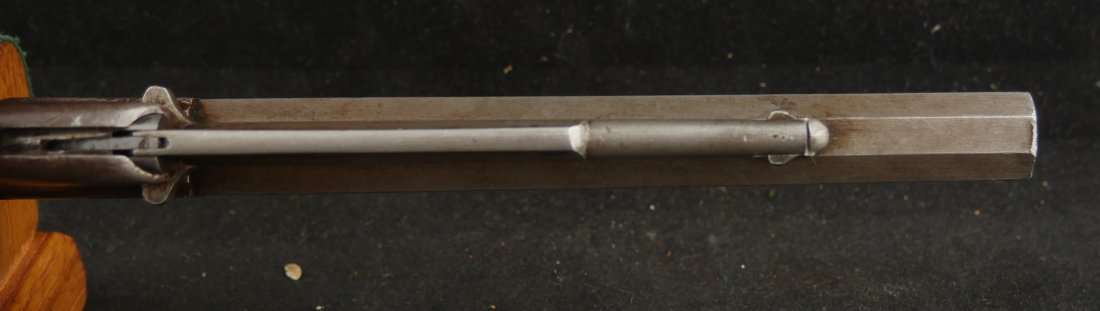
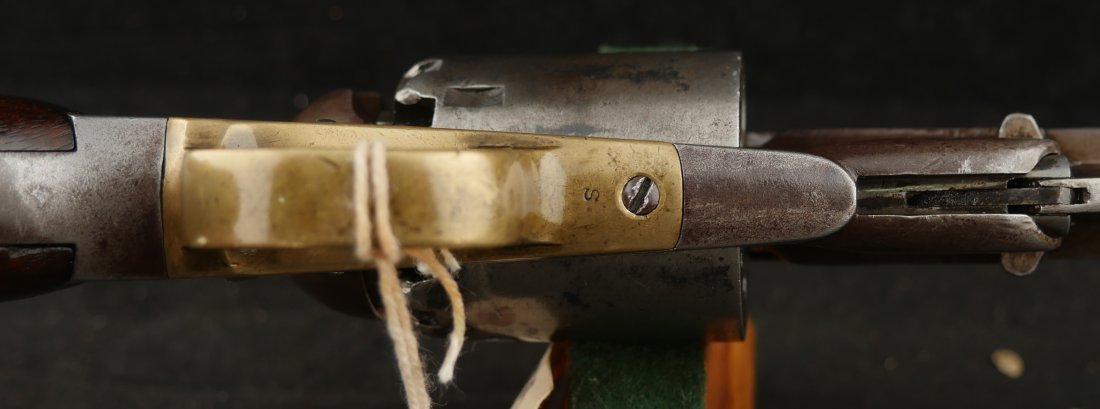
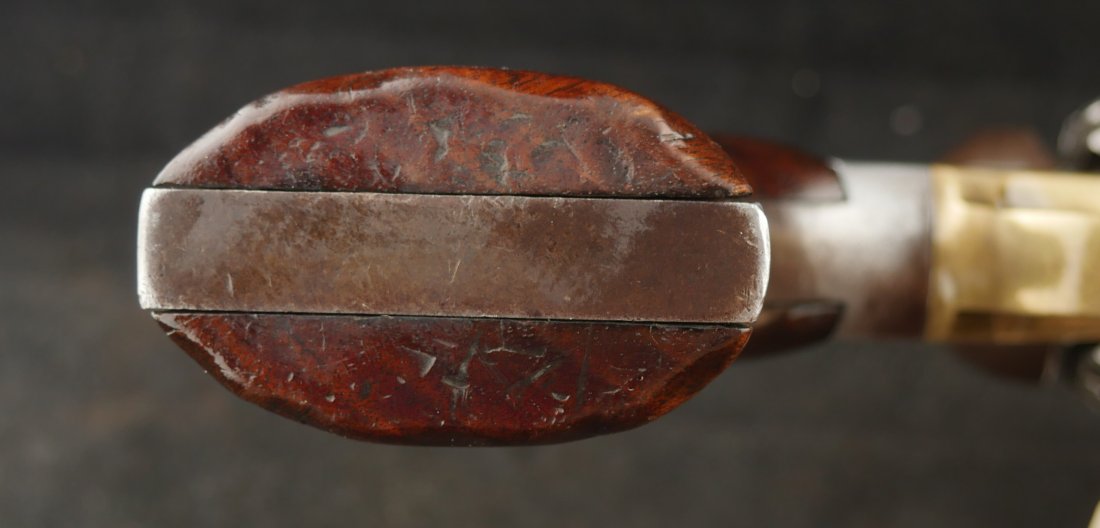
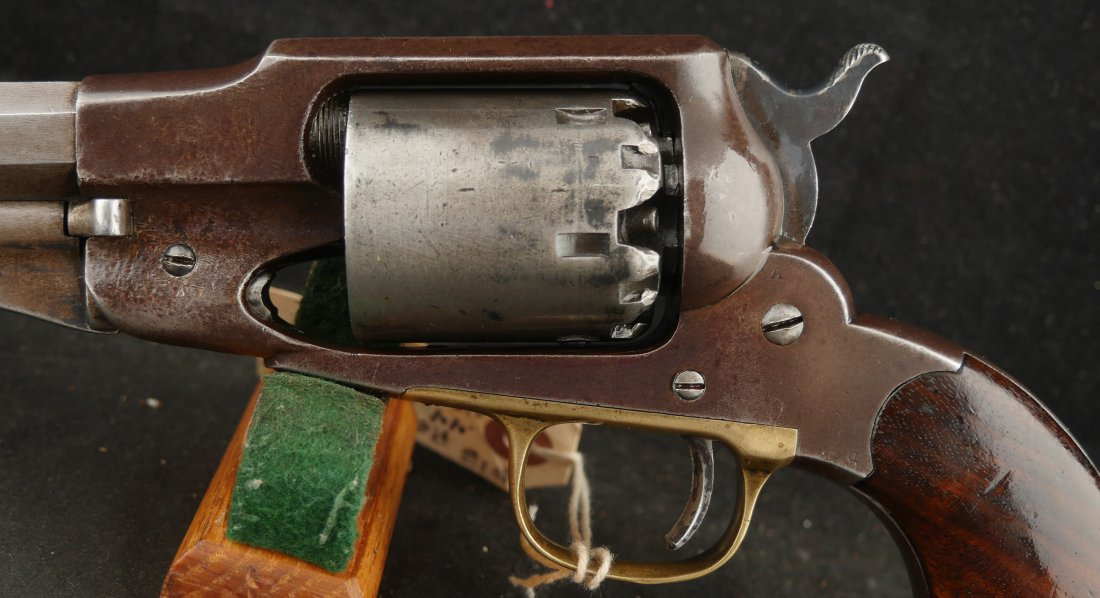
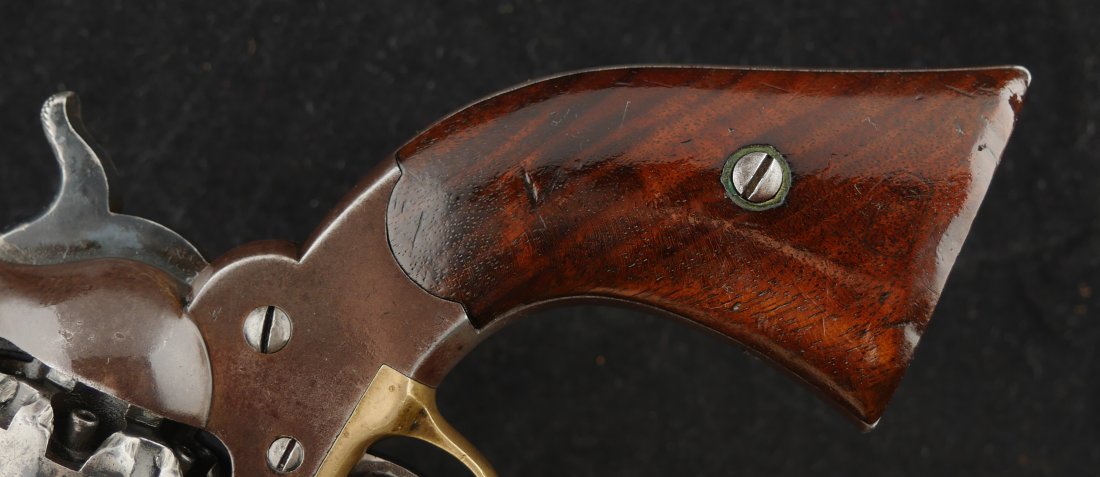
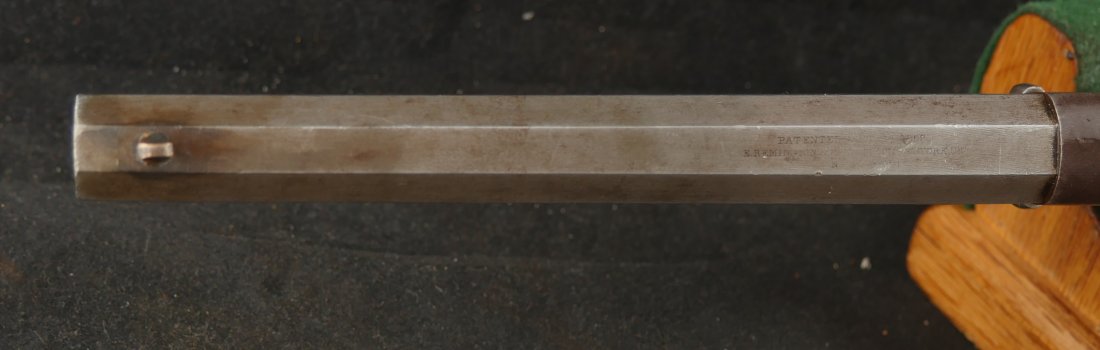
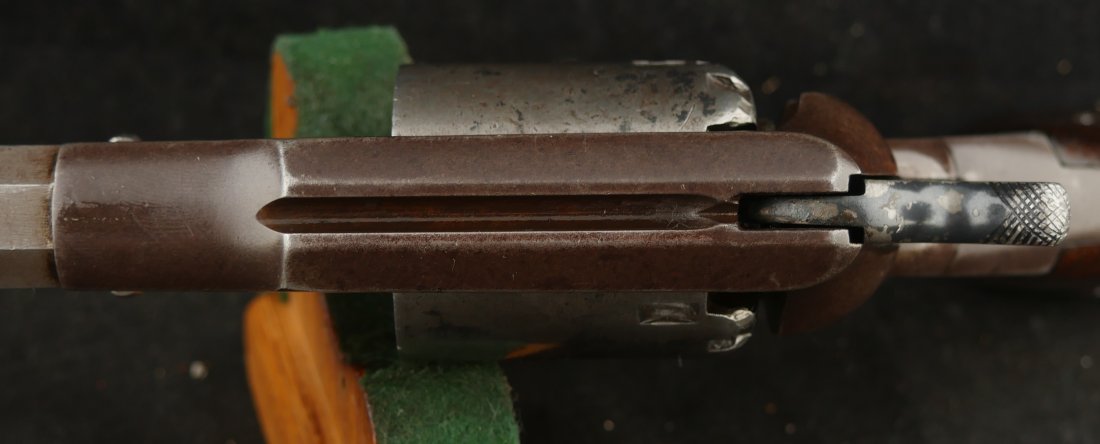
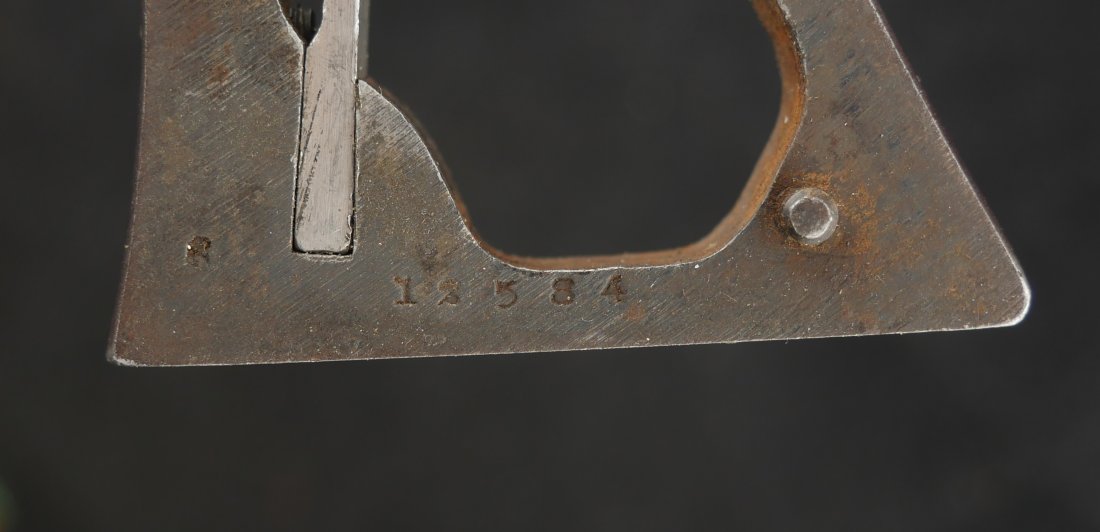
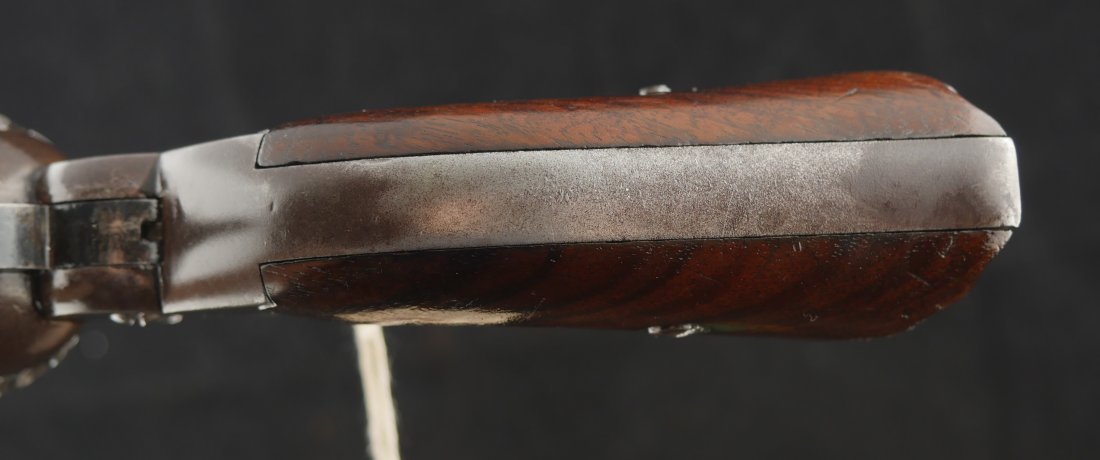
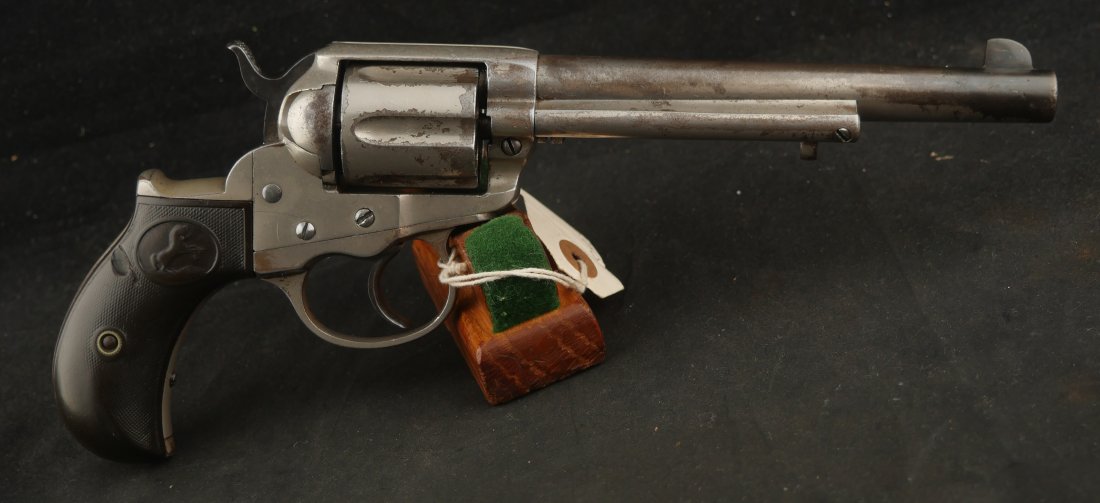
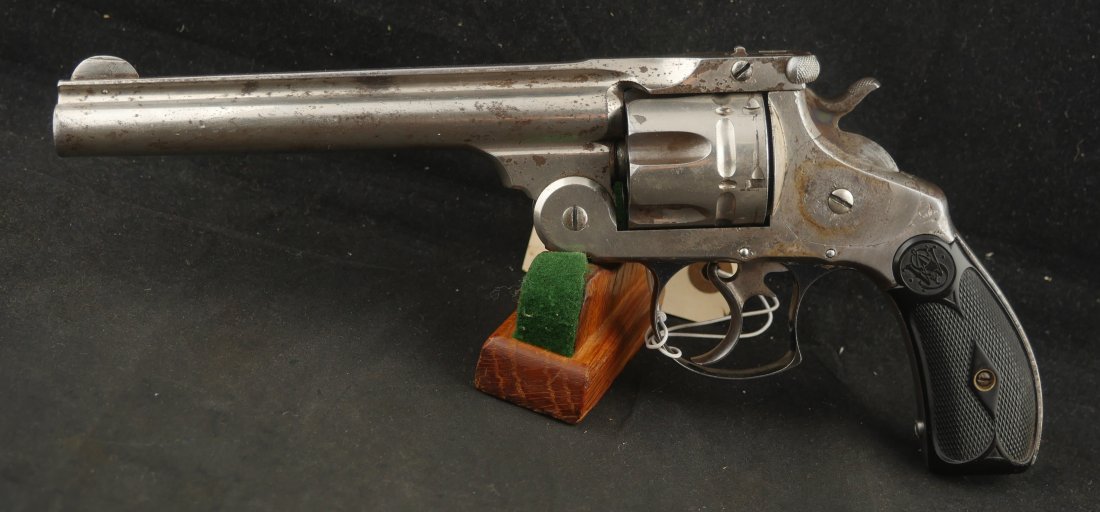
1858 REMINGTON “OPENSHAW” REVOLVER, SERIAL NUMBER 12584, CIVIL WAR ERA PRODUCTION TIME FRAME; ON THE INSIDE OF GRIPS IS HAND SCIBBLED THE NAME “Openshaw 1866″
This is a military inspected gun, with a faint but visible cartouche on the left grip. On the interior of the left grip panel, there is an inscription by hand that reads “Openshaw 1866″. Serial number is 12584, identifying this as Civil War production. The New Model was made from 1863-75 with a total of about 122,000, making this an earlier example and one produced during the American Civil War.
Fold3/NATIONAL ARCHIVES, military service of “Openshaw” soldiers in 1866-1867. The following were eliminated by reason of expiration of service:
Lt. Edward Openshaw, 71st NYSM 1862 and 156th NY Infantry, mustered out 1864;
John (KIA 1862) and Henry, 40th NY Infantry, discharged disabled 1862;
Joseph, 71st NYSM, 3 months, 1863; Joseph, 5th NY Heavy, deserted 1863;
Wesley, 2nd Eastern Shore Infantry into 11th Maryland Infantry, regiment mustered out June 1865;
George 8th Delaware, regiment mustered out 1865;
George 4th Penn. Reserves, regiment mustered out 1864;
William dropped from rolls, and James, 3rd Penn. Cavalry, regiment mustered out May 1865;
William, 20th Penn. Militia, mustered out1863;
George 4th New Jersey Infantry, regiment mustered out June 1865;
William and James, 1st RI Light Artillery, mustered out June 1865
(Summation, all soldiers named Openshaw mustered out between 1862 and 1865. None served into 1866/67 as dated on inside of grips; no Openshaws served in the Confederate Army; no Openshaws served in the regular U.S. Army starting in 1866 or Indian Wars)
Four Openshaws saw service in Utah Territorial Militia, 1866-1867 for the Utah Blackhawk War:
From the “LDS Family Tree” website:
2nd Lieut. Roger W. Openshaw, Capt. James Guymon’s Company, Fountain Green; 1st Regiment, 1st Brigade; MI April 1, 1866; MO Nov. 1, 1866 (Emigrated prior to handcart companies, 1854)
Sergeant Levi Openshaw, Capt. John D. Holladay’s Company, C Company, 1st Regiment, 2nd Brigade, 2nd Division; Enlisted May 11, 1866; Discharged, Aug. 29, 1866 (Emigrated with Martin Handcart Co., 1856)
Sergeant Samuel Openshaw, Capt. John D. Holladay’s Company, C Company, 1st Regiment, 2nd Brigade, 2nd Division; Enlisted May 11, 1866; Discharged, Aug. 29, 1866 (Emigrated with Martin Handcart Co., 1856) See widow 13479; Cert 9862; File Jan. 2, 1903, Mesa, Ariz.
Private Eli Openshaw, Capt. John D. Holladay’s Company, C Company, 1st Regiment, 2nd Brigade, 2nd Division; Enlisted May 11, 1866; Discharged, Aug. 29, 1866 (Emigrated prior to handcart companies, 1854)
Utah Militia, HDQTS returns of 1867, show 4926 revolvers inventoried: 2147 for Cavalry, 97 for artillery, 2569 for infantry; 6960 rifles; 7 pieces of artillery; from Utah Territorial Militia, No 1298, 1905 Reminiscences, unknown author:
“It was in the Spring of 1865 when we were busy plowing and planting that the news came to Gunnison, where we lived, that the Indians had killed a man at Twelve-mile Creek, gone up Salina Canyon and killed Barney Ward and another man and driven off all the Salina stock.. While we were out of town word came from Manti to raise men and ammunition and proceed to Salina…That fall we hauled grain and drove a large herd of cattle to Salt Lake City to buy guns with, also pistols and ammunition, paying as high as $40 for a Remington pistol. I gave $75 for a Henry rifle and ten cents each for cartridges…”
Shellin Simmons, Across the Sea, Across the Plains (Cedar Fort, 2012), 126-27 Scotts Bluff, October 4, 1856.
Openshaw Family On October 4, the Martin Company passed through Scotts Bluff, 559 miles from the Salt Lake Valley. Up until this point the journey, twenty-two-year old Samuel Openshaw had been keeping a daily record of his experiences. October 3 was his last daily entry. Samuel was traveling to the valley with his parents, William and Ann Openshaw … Samuel’s brothers, Roger and Eli, were blessed to emigrate in March 1854 to prepare the way for the family. Roger left behind his wife, Eliza Booth Openshaw, in the care of his family, Little did Roger knew when he left in 1854, he would never see his wife again. Eliza and her sister-in-law Eleanor became sick in early September and had to hauled in the handcarts. Samuel recorded the difficulties in pulling the women in the handcart and continued to record the decline in Eliza’s health. He did not include the events of Eliza’s death …
A Brief History of the Utah Black Hawk War
The Utah Black Hawk War was the longest and deadliest conflict between Native Americans and settlers in Utah’s history, yet it’s a part of our past that often gets only a passing mention. It wasn’t a single war with clear battle lines or formal declarations. Instead, it was years of tension, fear, retaliation, and survival playing out across central and southern Utah between about 1865 and 1872.
To understand how it started, you have to go back to the steady expansion of Mormon settlements in the 1850s and early 1860s. Settlers moved into valleys that had long been used by Ute, Paiute, and Navajo peoples for hunting, grazing, and seasonal travel. As farms, fences, and towns spread, the land and resources Native people depended on began to disappear. Game was driven off. Grazing areas were taken. Promises made by territorial and federal authorities were often delayed, reduced, or ignored altogether.
Tensions built for years before violence broke out. Native people were frequently treated as obstacles rather than neighbors. Trade disputes went unresolved, debts were unpaid, and in some cases Native children were taken and sold into servitude, often justified by settlers as “rescue” or religious instruction. Native leaders were arrested, humiliated, or punished without meaningful legal process. All of this created a situation where anger and desperation were growing, even if many on the settler side failed to see it.
The conflict takes its name from Antonga Black Hawk, a Ute leader who became one of the most visible figures in the resistance. By 1865, Black Hawk and others had reached the conclusion that peaceful coexistence was no longer protecting their people. Raids began across Sanpete, Sevier, Juab, Millard, and Utah counties, targeting livestock, supply routes, and isolated settlements. These raids weren’t random. Livestock had become the economic backbone of the settlers and a direct symbol of the land being taken, and seizing it was both practical and symbolic.
From the Native perspective, this was a fight for survival. Food sources were gone, promised aid didn’t arrive, and entire communities were being pushed toward starvation. Raiding was a way to feed their people and to push back against what felt like an unstoppable loss of their homeland. Many Native leaders believed that without resistance, their people would simply disappear.
Settlers, of course, saw the situation very differently. To them, these raids were attacks on families, farms, and livelihoods. Isolated communities feared annihilation, and territorial leaders believed they had little choice but to respond with force. Local militias were organized, towns were fortified, and retaliatory expeditions were launched. While there were public calls for restraint, the reality on the ground often involved collective punishment, forced removals, and killings that went far beyond the original incidents.
The war itself was not made up of large, famous battles. It was a grinding, ugly conflict of ambushes, raids, reprisals, and fear. Entire towns in Sanpete Valley were temporarily abandoned. Supply trains were attacked. Ranches were burned. One of the darkest moments came in 1866 with the Circleville Massacre, where Paiute men, women, and children were killed while being held by settlers who claimed they feared an uprising.
Casualty numbers are difficult to pin down, but historians generally estimate that around 70 to 90 settlers were killed. Native losses were far higher—likely several hundred—many of them women and children. Just as devastating as the deaths were the consequences that followed: starvation, disease, displacement, and the destruction of entire ways of life.
By the early 1870s, the conflict began to collapse under its own weight. Native bands were exhausted, starving, and increasingly hemmed in by the U.S. Army. Black Hawk himself was suffering from illness and injury. In 1870, he formally surrendered. A few years later, he visited Mormon communities and publicly asked forgiveness for the violence. That moment is often remembered as an act of humility, but it also reflects the reality that his people had been broken by hunger, loss, and overwhelming force. He died not long after.
The end of the war did not bring healing so much as finality. Native peoples were forced onto reservations, cut off from their lands, and made dependent on systems that had already failed them. Settlers gained security and control over central Utah, allowing towns and farms to expand—but at a cost that is impossible to ignore.
The Utah Black Hawk War isn’t a story of heroes and villains. It’s the story of two cultures colliding under pressure, each believing their survival was at stake. It’s a reminder that Utah’s settlement was not just a tale of faith and perseverance, but also one of fear, injustice, and deep human loss—especially for those who had the least power to shape the outcome.
Only logged in customers who have purchased this product may leave a review.
Shipping Policy
PLEASE READ
We accept Check, Money Order, Credit Card, Wire, etc.
If you send a Cashier’s Check or Money order, items will get shipped immediately. If you send a personal check, we will wait for the check to clear before shipping. Please send an invoice with payment, it makes it easier to keep track of payments that way. Also, please be sure your shipping address is correct.
CREDIT CARD FEES: Domestic: 3.5%. International: 6.0%
WIRES: If sending a wire add $30
INSURANCE: We will only insure through the mail carrier when specifically asked to.
Shipping does not include insurance through courier. We carry our own insurance but there is a $1000 deductible. If you would like your box insured through the shipping company, the cost is $10 and you add an additional $1 for every hundred dollars’ worth of insurance that you want. $1000 insured value = $20. We do our best to package items as secure as we can, in the previous 6 years we have had 3 guns broken (all 3 were muskets) and we have shipped thousands of guns. USPS is difficult to get money out of even if you do insure through the USPS.
Cost: US $1 per $100 in value, plus $10. Ex. $1500 Insurance = $15 + $10 = $25
SHIPPING:
If you have purchased more than 1 item and want combined shipping. Please contact us.
If we are shipping internationally, we will need to give you a shipping cost.
Contact us if you have any questions in regards to shipping.
Send Invoice or Order Form with Payment.
Send the attached invoice or fill out an order form to send with payment. Order Form: Download the form here
Make payment out to Rob Robles and ship to, PO Box 1218, Salem, Utah, 84653, USA.
YOU MUST USE INVENTORY NUMBER IN ALL REFERENCES TO ITEM, (EX: 079-7654, Colt M-1860 Army…)
Be sure your shipping address is correct.
Cancellation / Return / Exchange Policy
RETURN POLICY
Money back, less cost to ship, if not satisfied. All sales are allowed a 3-5 business day inspection. Please contact us to make arrangements before shipping any item back for refund. No refund is due until I have received the item and it has been inspected.
You are responsible to send a copy of the invoice or Order Form with a return. This is your receipt, you must send it with the item being returned. Once the item being returned has been received, and inspected, and found not to be altered, your refund will be processed.
Please let us know if you have any questions or if there is anything we can do for you.
Thank you for your business.
Rob and Griff





Reviews
There are no reviews yet.