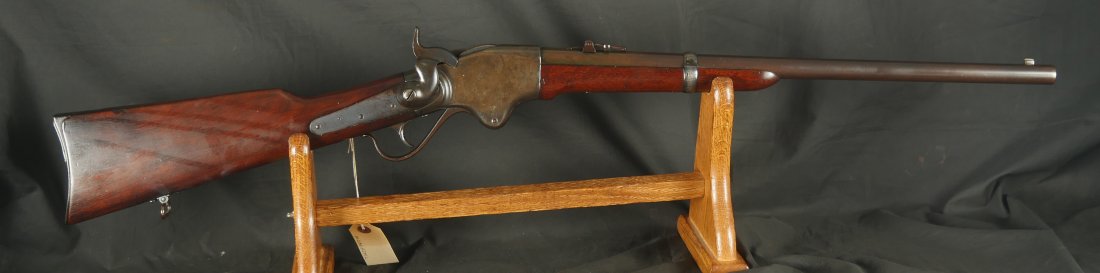
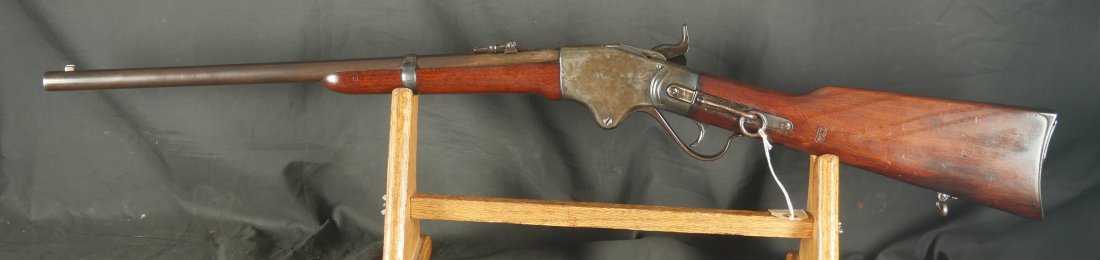
ILLINOIS 12TH CAVALRY (Three Years) Twelfth Cavalry.-Cols., Arno Voss, Hasbrouck Davis; Lieut.-Cols., Hasbrouck Davis, Thomas W. Grosvenor, Hamilton B. Dox; Majs., Francis T. Sherman, John G. Fonda, Thomas W. Grosvenor, Stephen Bronson, Hamilton B. Dox, Cephas Strong, John H. Clybourn, Andrew H. Langholz. This regiment was organized at Camp Butler in Feb., 1862, and remained there guarding Confederate prisoners until June 25, when it was mounted and was sent to Martinsburg, Va. The first time it met the enemy was after the evacuation of Winchester in September, when a scouting party came up with some Confederate cavalry, in numbers far superior to its own, but by a vigorous charge it routed them and drove them several miles, killing, wounding and capturing a considerable number. In November the regiment was called away from picket, assigned to Gen. Sigel’s army, and acted as escort from Warrenton to Fredericksburg, frequently having severe brushes with scouting parties of Gen. Stuart’s cavalry. While at Dumfries the enemy surprised the outpost pickets and took about 50 of the 12th Ill. and 1st Md. cavalry prisoners, when a vigorous fight ensued, which continued all day, but the enemy was finally repulsed with severe loss, having 25 or 30 killed and about 40 wounded, while the Federal loss was but 3 killed and 8 wounded. In a conflict at Tunstall’s station in May, 1863, the regiment retired with a loss of 2 killed and several wounded. While in route to Gloucester point it captured 15 Confederates, destroyed a large quantity of cavalry saddles at King and Queen Court House, and a train of 18 wagons loaded with corn and provisions near Saluda. The total loss sustained by the regiment in this most remarkable raid was 2 commissioned officers and 33 enlisted men, while it brought with it 100 mules and 75 horses captured from the enemy. The regiment was present at the cavalry battles at Falling Waters, the Rapidan and Stevensburg, in all of which it acquitted itself with its usual bravery. On Nov. 20, it was relieved from duty with the Army of the Potomac, and ordered home to reorganize as veterans. When ready to return to the field it was ordered to the Department of the Gulf and participated in the different engagements of the retreat of Gen. Banks down the Red river, losing a large number of men. In the early part of Nov., 1864, the 12th, with other cavalry regiments, made an expedition to Liberty, Miss., where a sharp action ensued, the Federals driving the enemy and capturing a number of prisoners, cannon and small arms. During the remainder of its career it was distributed in detachments, and was actively employed in guard and escort duty. The regiment was mustered out at Houston, Tex., on May 29, 1866, arrived at Springfield on June 14, and on the 18th it received final pay and discharge. Source: The Union Army, vol. 3 **********************************************************************************
Reports of Col. Hasbrouck Davis, Twelfth Illinois Cavalry, commanding Post of Napoleonville, La. HDQRS. NAPOLEONVILLE, July 30, 1864. SIR: I have the honor to report an attack [on] my pickets last night. Three days ago I sent Capt. Howk and Company L, seventy men and two commissioned officers, to picket and patrol the roads from Paincourtville toward Lake Natchez. I yesterday sent thirty men of I Company, under Lieut. Graves, to increase the force. The inclosed chart+ will give you an idea of the position of the force last night. The camp of reserves was at No. 1 on the Spanish road; a picket of six men was at No. 2 on the Spanish road; a picket of four men was at No. 3 on the military road; a picket of four men was at No. 4 on the military road; a picket of five men was at No. 5 on the military road. No. 5 is about three miles out from the bayou. At 9 p. m. a patrol of one sergeant and eight men was sent across the plantations toward Marcelin Le Blanc’s house, marked No. 6 on the chart. At that house they struck a considerable rebel picket and drove the away after a brisk skirmish, in which the rebels lost 1 man killed and 2 wounded, 1 horse killed and 2 captured. The patrol also took 15 guns, mostly fowling-pieces. The rebel party was probably Boone’s battery, which had come into this county to steal horses. The patrol fell back to the pickets on the military road and were not pursued. Simultaneously with the above the pickets at Nos. 4 and 5 were attacked by a party coming across the plantation from a northerly direction. A few shots were exchanged, and the rebels retired. We suffered no loss in either affair. Capt. Howk immediately moved up with his reserve force, and I dispatched Lieut. Gray, with twenty-five men of Company M, from Napoleonville, making in all a force of 125 men. They moved up briskly beyond La Blanc’s plantation, but could find no further trace of the enemy. From the letter which I send you herewith, taken from captured saddle-bags, and from other information, I conclude that the first rebel party was thirty men of Boone’s battery, armed with stolen shotguns, and the second party was twenty-six men of some cavalry regiment, probably the Fourth Louisiana. Whether other forces are in reserve is a matter of uncertainty, but I do not believe that there is any considerable force there. You will see from these letters that the battery left Bayou Boeuf after the 20th July, under the impression that the Union forces had left the district. I have just received your order by telegram to move my whole force in that direction and shall move at once. Very respectfully, your obedient servant, H. DAVIS, Col., Cmdg. Post. Capt. B. B. CAMPBELL, Acting Assistant Adjutant-Gen., La Fourche District. —– JULY 31, 1864. The expedition has returned safely. Both of the parties who attacked my pickets on Friday belonged to Boone’s battery and were commanded by Lieut. Picon, formerly of Donaldsonville, and were only after horses [and] plunder. They came to and crossed Bayou Grand on Friday night and after the affair of the pickets went back kiting across the bayou. The same night, about four or five miles from the bayou, they broke into squads, and leaving the road struck across the swamps to Grand River, which they crossed. The were in more hurry to get away than they were to come. I followed their tracks to the point where they broke up. The road this side the bayou is a mere wood track, almost impassable, the mud being often to the horses’ bellies, and the swamp is perfectly impassable to any body of men. As I formerly reported to you, there are a few of Journal’s cavalry at Point Marsigner, behind Plaquemine, but none between the La Fourche and that place. At the same time there are thieves and jayhawkers about in this parish. The party that went to Gentilly’s plantation on Natchez Bay [returned] safely without [seeing] an enemy. H. DAVIS, Col., Cmdg. Post. Capt. B. B. CAMPBELL, Acting assistant Adjutant-Gen. Source: Official Records PAGE 181-83 LOUISIANA AND THE TRANS-MISSISSIPPI. [CHAP. LIII. [Series I. Vol. 41. Part I, Reports. Serial No. 83.] *************************************************************************************
AUGUST 15-21, 1864.–Expedition from Paincourtville to Lake Natchez, La., with skirmish on Grand River. Report of Col. Hasbrouck Davis, Twelfth Illinois Cavalry. NAPOLEONVILLE, August 21, 1864. SIR: I have the honor to report that hearing reports from different quarters that the rebels were engaged in opening a road from the Grossetete in this direction, I sent out Capt. R. A. Howk, Company L, Twelfth Illinois Cavalry, with twelve picked men from Companies L and I of that regiment, to ascertain if the reports had any foundation. The party left Paincourtville on Monday last at 4 p. m., crossed Grand Bayou; went thence to Bayou Goula; thence to Plaquemine; thence down the Plaquemine to Indian Village; thence to Grand River and down Grand River to near the head of Lake Natchez; but not being able to cross the swamps and get to Grand Bayou in that direction, Capt. Howk was obliged to retrace his steps and return the way he went. On Grand River, near the Sorrel, he fell in with twenty-six men of Capt. Ratcliff’s company, under command of the captain, whom he reported chasing part of them over Grand River, with loss to the enemy of 1 killed and 1 wounded. People in the vicinity state that the company numbers about seventy men, located in that vicinity for bushwhacking. Capt. Howk reports the roads in a very bad condition; that there is a tolerably good road direct from Indian Village to the head of Lake Natchez, but no practicable road from the Grand Bayou westerly to the lake, nor any way by which the lake can be reached from Grand Bayou nearer than by the Bayou Goula route. There is no returned safely with all his command yesterday after a absence of five days. I have the honor to be, very respectfully, your obedient servant, H. DAVIS, Col. Twelfth Illinois Cavalry, Cmdg. Post. Capt. B. B. CAMPBELL, Acting Assistant Adjutant-Gen. [Indorsement.] HDQRS. DEFENSES OF NEW ORLEANS, New Orleans, La., August, 27, 1864. Respectfully forwarded. This seems to be an intricate country, and I am endeavoring to get a good topography of it. It has been thus far very little understood. None of the maps I have seen give anything of correct indication of the practicable roads. I would like to obtain the services of a Mr. Hien, who, I am told, is a good topographical engineer and on duty in the engineer department. T. W. SHERMAN, Brig.-Gen., Cmdg. Source: Official Records PAGE 260-83 LOUISIANA AND THE TRANS-MISSISSIPPI. [CHAP. LIII. [Series I. Vol. 41. Part I, Reports. Serial No. 83.] *************************************************************************************
Reports of Maj. John H. Clybourn, Twelfth Illinois Cavalry. NAPOLEONVILLE, LA., September 8, 1864. I have sent out Capt. Steele with one battalion of the Twelfth Illinois Cavalry to scout the country about Grand River, Bayou Natchez, Bayou Pigeon, and Grand Lake, to destroy all boats that may in any way aid the enemy as transportation across these streams. I will keep you informed of any engagements that may take place. Respectfully, JOHN H. CLYBOURN, Maj., Cmdg. Post. Capt. B. B. CAMPBELL, Assistant Adjutant-Gen. —– NAPOLEONVILLE, LA., September 11, 1864. Capt. Steele has returned from his expedition to Grand Lake. He captured 4 prisoners, 5 horses, and destroyed some 40 boats on the different lakes and bayous. JOHN H. CLYBOURN, Maj., Cmdg. Post. Capt. B. B. CAMPBELL, Assistant Adjutant-Gen. ———– Report of Capt. William J. Steele, Twelfth Illinois Cavalry. NAPOLEONVILLE, LA., September 11, 1864. GEN.: I have the honor to report the following as the result of the party sent out scouting from this place on the 7th instant in accordance with orders: I left Napoleonville on the morning of the 7th instant with 150 men and six officers, marched by way of Paincourtville to Grand Bayou, crossed the bayou, and camped for the night on Madam Le Bar’s plantation; started daylight next morning; moved up bayou to saw-mill with intention of crossing swamp to upper side of Lake Natchez, thus saving distance of twenty-five miles, but found it impossible, the mud being so stiff that horses could scarcely move. I then went the only passable road up Grand Bayou, and struck the Mississippi at Mr. Recard’s plantation, about eight miles this side of Bayou Goula; took nooning at Recard’s, and reached Plaquemine just at dark; drew forage and rations and started at daybreak 9th instant; marched along Bayou Plaquemine to Mr. Roan’s plantation on Bayou Sorrel, destroying some twenty flat-boats, capable of crossing from four to forty horses, and some forty or fifty pirogues, skiffs, and small boats. I also destroyed a boat load of smugglers’ goods, consisting of one barrel of rasps, one keg of files, and a quantity of stationery; could find no owner for it. Captured 7 horses ready saddled; they belonged to bushwhackers, who upon our approach saw no way of escaping, left their horses and hid in the woods, where it was impossible to find them on account of the underbrush. On Roan’s plantation I captured 4 prisoners without arms and 2 horses with equipments. They belonged to the same party that attached the Sixteenth Indiana, and were with the party that had the captured horses, when the gun-boat suddenly came upon them at Micheltre’s plantation, at the mouth of Bayou Pigeon, and recaptured the horses and equipments. The men all took the woods and escaped, except the few that I came across and captured. There is no force of the enemy this side of Bayou Plaquemine, Bayou Sorrel, Bayou Pigeon, or Grand Bayou, more than a few bushwhackers, which a force of twenty-five men could any time master. There is now no way of crossing the above-named bayous, except by building new rafts or swimming, which may be done at several points. Learned that a party that captured the Sixteenth Indiana had crossed into the State with their prisoners; also that there were two regiments of the enemy in the neighborhood of Franklin and the Teche, the First and Fourth Louisiana Infantry. Thinking it useless to proceed farther I returned, arriving in Plaquemine the same night; left Plaquemine on the morning of the 10th; camped seven miles from Donaldsonville, and arrived at Napoleonville about noon of the 11th instant, having marched a distance of 175 miles, meeting with no opposition whatever. I am, general, very respectfully, your obedient servant, W. J. STEELE, Capt. Company C, Twelfth Illinois Cavalry. Brig.-Gen. CAMERON, Cmdg. District of La Fourche. Source: Official Records CHAP. LIII.] EXPEDITIONS TO GRAND LAKE, ETC., LA. PAGE 748-83 [Series I. Vol. 41. Part I, Reports. Serial No. 83.] ********************************************************************************
SEPTEMBER 11, 1864.–Skirmish at Hodge’s Plantation, La. Report of Col. Hasbrouck Davis, Twelfth Illinois Cavalry. DONALDSONVILLE, September 13, 1864. (Received 5.20 p. m.) Hodge’s plantation, on the other side of the river, is in Col. Logan’s command. I have shown him your dispatch. He says the rebels attacked the plantation Sunday and were repulsed with loss of 1 killed and 3 wounded. Some of his men guarded the place last night and will do so again to-night. H. DAVIS, Col. Twelfth Illinois Cavalry, Cmdg. post. Maj. G. B. DRAKE, Assistant Adjutant-Gen. Source: Official Records CHAP. LIII.] OPERATIONS IN RALLS COUNTY, MO. PAGE 761-83 [Series I. Vol. 41. Part I, Reports. Serial No. 83.] **********************************************************************************
Report of Maj. John H. Clybourn, Twelfth Illinois Cavalry. HDQRS. ILLINOIS CAVALRY, Napoleonville, September 30, 1864. GEN.: In pursuance to orders received from your headquarters, dated Thibodeaux, September 24, 1864, I have the honor to forward the official report of my expedition to Grand River and Bayou Pigeon: Monday, 26th instant, my command, consisting of six companies Twelfth Illinois Cavalry, left this place at 6 a. m.; arrived at Donaldsonville, where two companies joined my command, and remained until 1 p. m., when the march for Bayou Goula was taken up, at which place the command halted and camped for the night. About 1 o’clock the pickets were fired into by a party of jayhawkers of Capt. Williams’ command, evidently not knowing of our presence in that vicinity. A few shots were exchanged, when the enemy turned and ran. The pickets were then strengthened in case of any further attack. Tuesday, September 27, the command left Bayou Goula at 4 a. m. for Plaquemine, at which place the command arrived at 8 o’clock; then proceeded to Indian Village and arrived at 12 m. At 1.30 p. m. marched for Micheltre’s Ferry. After leaving Indian Village three miles, a small boat was captured containing one sack of coffee, some men’s and women’s shoes, also one trunk containing dry goods, which were sent back to Indian Village, where one company were left to guard the ferry at that place. The command then resumed their march. About 3 p. m. the advanced guard was fired into by two men. They charged them, but they took to the high weeds which infest that region and made their escape. We captured their horses and arms. Companies A and K, under command of Lieut. Fisher, made a forced march in order to form junction with gun-boat on Grand River and Bayou Pigeon, at which place he arrived at 4 p. m. ; the rest of the command followed. The whole command encamped for the night at Micheltre’s plantation. It was reported that the enemy were in small force on the other side of the bayou, consequently on Wednesday, September 28, one company was sent on that side of the bayou. The crossing being bad, the horses had to swim the bayou, causing some little delay. After the company under Lieut. Pratt’s command were ready, the balance of my command proceeded to Indian Village, Lieut. Pratt meeting no enemy and not being able to proceed any farther on the other side of the bayou on account of the horrible condition of the roads-they being blocked up and impassable-recrossed and joined me before I arrived at Indian Village. Flat-boats, scows, small boats, &c., were plenty. I destroyed them, but it is evidently of no use; the last expedition did the same and I found them just as plenty as before. The country around Indian Village is well adapted to contraband and smuggling purposes. It is my opinion that one squadron of cavalry should be stationed at Plaquemine, where they could easily operate on the bayou in that vicinity, and thereby break up their nests, detect and arrest all person aiding in that trade, and also detail and forever disband the parties operating on Bayou La Fourche. The command camped for the night at Indian Village. Thursday, September 29, the command broke camp and proceeded to Plaquemine, where Capt. Overrocker, with a party, had proceeded for forage and rations, and when the command arrived the men and horses were provided with provisions and forage and resumed their march for Bayou Goula. When we arrived there it was reported that Capt. Williams had been at Bayou Goula on the 29th, and had gone to his camp at Myers’ Mill, in the rear of Bayou Goula, where Capt. How, with two companies, was sent. They proceeded about one mile outside of the town, halted, and camped. On the morning of Friday, September 30, left his camp at Bayou Goula at 3 a. m., with intention of capturing Williams’ band of jayhawkers, said to be encamped at the mill. The captain proceeded to the mill, and found on his approach that the rebels had been camped there at a house about twenty minutes previous to his arrival, but no clue could be found as to where they had gone. Capt. Howk, while marching through Bayou Goula with his command, did allow his command to break open houses and commit depredations, contrary to my orders, and the citizens of the place informed me that he allowed his men to take money and clothing from their persons. On his arrival at Donaldsonville I placed him in arrest, and will [have]charges preferred against him, that he may be brought before a court-martial for trial for disobedience of orders. This is the only instance, to my knowledge, where any depredations were committed. All the officers of my command were notified by me that they would be held strictly responsible for the conduct of their men and for any depredations that might be committed. The command left Bayou Goula on Friday morning, September 30, for Donaldsonville and Napoleonville, La. On arriving at the Cut-Off, on the Donaldsonville road, it was ascertained that fifteen miles could be saved; so four companies were dispatched on that road, the others taking the river road to Donaldsonville, where they arrived at 4 p. m. 30th. The command arrived at 7 p. m. at Napoleonville, La. JOHN H. CLYBOURN, Maj., Cmdg. Twelfth Illinois Cavalry. Brig. Gen. R. A. CAMERON, Cmdg. District of La Fourche. Source: Official Records PAGE 821-83 LOUISIANA AND THE TRANS-MISSISSIPPI. [CHAP. LIII. [Series I. Vol. 41. Part I, Reports. Serial No. 83.] *************************************************************************************
DECEMBER 23-24, 1864.–Expedition from Baton Rouge to Clinton, La. Report of Maj. John H. Clybourn, Twelfth Illinois Cavalry. HDQRS. DETACHMENT CAVALRY DIVISION, Baton Rouge, December 25, 1864. GEN.: I have the honor to submit the following report of my expedition across the Amite River: Left Baton Rouge, La., on the 23d instant at 2 p. m., with two commissioned officers and 100 men; marched out on Clay Gert road to Harrell’s Ford on Amite River, sixteen miles from Baton Rouge; found the river too high to ford or swim. Commenced crossing my command on a dugout found on this river. Could only cross two horses at a time, and when about one-half of my command were ferried across, the bottom was accidentally knocked out by one of the horses. I then marched my command up both sides of the Amite River and formed a junction at Benton Ford six miles from Harrell’s Ford. We found the river too high to ford and it was impossible for me to swim in the balance of my command across. I then sent back the part of the command that was on this side of the river to Baton Rouge. I then marched the balance on the other side the Amite to Burlington Ferry, sixteen miles from Benton Ford and six miles from Williams’ Bridge’ met a part of the rebel Col. Bob Hunter’s command between Benton Ford and Burlington Ferry, captured 4 prisoners; arrived at Burlington Ferry at 4 ten horses at a time. Crossed my command and marched to Bogan’s Ford on the Comite River, nine miles from Burlington Ferry. Ran across a gang of jayhawkers, under command of Capt. Bob Hopper, between Bogan’s Ford and Burlington Ferry, charged them and captured 4 of them; arrived at Bogan’s River, and marched to Baton Rouge. Learning from a negro that the rebel Lieut. Brannan and Lieut. Brown were at the house of Mr. Granville Pierce, on Greenville Springs road, I charged up with a party of ten men and surrounded the place, capturing Lieut. Brannan’s orderly and the lieutenant’s horse and equipments, also Lieut. Brown’s horse and equipments, but could find nothing of the rebel officers. I am certain they were hid away in the house. Lieut. Brannan is chief of all the rebel scouts in this district. Marched a distance of seventy miles, captured 12 prisoners and killed 1 bushwhacker, captured 12 horses and 2 mules without the loss of a man. Sergt. George Rork, Eleventh New York Cavalry, was shot by a jayhawker through the hand. Sergeant Rork killed the jayhawker after he had shot him through the hand. Lieut. Philip Dougherty, of Earl’s command, deserves great praise for the service he rendered. His conduct was very brave and gallant. I did no learn of any large force being this side of Clinton, La. It was reported that the rebel Col. Scott had returned to Clinton with his command. Arrived back at Baton Rouge at 6 p. m. 24th instant. I have the honor to be, general, very respectfully, your obedient servant, JOHN H. CLYBOURN, Maj., Cmdg. Brig.-Gen. BENTON, Cmdg. District of Baton Rouge and Port Hudson. Source: Official Records PAGE 1002-83 LOUISIANA AND THE TRANS-MISSISSIPPI. [CHAP. LIII. [Series I. Vol. 41. Part I, Reports. Serial No. 83.] ***************************************************************************************
Report of Capt. Oliver Grosvenor, Twelfth Illinois Cavalry. HDQRS. TWELFTH ILLINOIS CAVALRY VOLUNTEERS, SECOND BRIGADE, CAVALRY DIVISION, Memphis, Tenn., March 12, 1865. COL.: I have the honor to respectfully submit the following report of the part taken by the regiment under my command in the recent expedition into the interior under command of Col. Shanks: The Twelfth Illinois Cavalry Volunteers marched with the brigade at 6.30 o’clock on the morning of the 3d instant; proceeded to Germantown, Tenn., and camped; remained there until the afternoon of the 4th; drew ten days’ rations; marched to Collierville, a distance of eleven miles, and camped; marched at 7 a. m. 5th instant, and camped at Lamar. On the 6th marched to Ripley, Miss., and went into camp. 7th, remained at Ripley and sent party of thirty men, under Lieut. Pratt, to New Albany, twenty miles distant, on a scout, who returned the same night. Remained at Ripley the 8th instant, doing picket duty. 9th instant, marched at 7 a. m. and returned to Memphis, reaching camp at 11.30 p. m. on the 11th instant. On the march from Germantown to Collierville, on the 4th instant, three men of C company were captured by bushwhackers; one of them has since escaped and returned to camp. He reports that the other two were murdered by their captors. During the expedition the regiment lost and abandoned 14 horses and 6 mules, and captured 9 horses and 10 mules. The regiment also captured 5 prisoners, one of them being a captain. I have the honor to be, very respectfully, your obedient servant, O. GROSVENOR, Capt., Cmdg. Twelfth Illinois Cavalry Volunteers. Col. H. DAVIS, Cmdg. Second Brigade. Source: Official Records PAGE 83-103 KY., S. W. VA., TENN., N. & C. GA., MISS., ALA., & W. FLA. [Series I. Vol. 49. Part I, Reports, Correspondence, Etc. Serial No. 103.] ***************************************************************************************
MARCH 28, 1865.–Skirmish at Germantown, Tenn. Report of Col. Hasbrouck Davis, Twelfth Illinois Cavalry. HDQRS. CAVALRY FORCES, Collierville, Tenn., March 29, 1865. COL.: I have the honor to report that the vedettes of the Eleventh New York at Germantown were attacked yesterday about noon by four men. A skirmish followed, in which 2 or our men were wounded, 1 supposed mortally, and 1 of the enemy was captured. The prisoners is sent by to-day’s train to the provost-marshal at Memphis, and I inclose to you a furlough found on his person, which shows Gen. Forrest to have been at West Point on the 15th. The country is well patrolled and no enemy in force found. As the railway progress, the forces shall be disposed as you order. At present we have reached the twin bridges where the First Brigade is encamped, and will probably reach La Fayette on Saturday. Lieut. Denninson was to have been nominated for brigade quartermaster, but as he has been mustered out I cannot make a new nomination till I have seen you. I hope you will suspended action for the present and let the regimental quartermasters supply their regiments as they have been doing. In the case of Temple, about from a report was made yesterday, Lieut.-Col. McQueen informs me that the horse is marked “U. S.” and the arms “C. S.” I inclose an order which will show the policy adopted by me toward citizens. Very respectfully, your obedient servant. H. DAVIS, Col., Cmdg. Col. E. D. OSBAND, Cmdg. Cavalry Division. [Inclosure No. 1.] WEST POINT, MISS., March 15, 1865. Maj. J. P. STRANGE, Assistant Adjutant-Gen.: MAJ.: I would most respectfully ask for a furlough for fifteen days to go to De Soto County, Miss., to get a horse which I have there. I can get the horse and return to the command within the time above stated. I have no horse here. Very respectfully, WARREN T. BASS, Private, Company A, Second Missouri Cavalry. This will certify that the above statements are correct, and it is believe the applicant will report promptly to his company at the expiration of this furlough. A. L. ZOLLINGER, Capt., Cmdg. Company A, Second Missouri Cavalry. [Inclosure No. 2.] GEN. FIELD ORDERS, No. 1. HDQRS. CAVALRY FORCES, Collierville, Tenn., March 25, 1865. In assuming command of the cavalry forces on the line of the Memphis and Charleston Railroad occasion is taken to remind the troops that they are now in a country regarded by the Government as conquered; that a loyal State organization exists, and the inhabitants are under the protection of the Union forces. It is therefore expected that all good soldiers will conduct themselves so as to give no just cause of offense. The fact that the good name of the cavalry is at stake ought to be a sufficient inducement to good behavior, but if further is needed it will be found in the fact the commanding general has ordered all damages done to be assessed against the depredators when discovered, and in cases where no discovery is made against the whole force. Commanders of regiments will adopt every precaution against straggling. All stragglers will be reported at these headquarters to be placed at work upon the railroad. This order will be read at the head of every company of the command. By order of Col. H. Davis: I. CONROE, Lieut., Twelfth Illinois Cavalry, and Actg. Asst. Adjt. Gen.
Only logged in customers who have purchased this product may leave a review.
Shipping Policy
PLEASE READ
We accept Check, Money Order, Credit Card, Wire, etc.
If you send a Cashier’s Check or Money order, items will get shipped immediately. If you send a personal check, we will wait for the check to clear before shipping. Please send an invoice with payment, it makes it easier to keep track of payments that way. Also, please be sure your shipping address is correct.
CREDIT CARD FEES: Domestic: 3.5%. International: 6.0%
WIRES: If sending a wire add $30
INSURANCE: We will only insure through the mail carrier when specifically asked to.
Shipping does not include insurance through courier. We carry our own insurance but there is a $1000 deductible. If you would like your box insured through the shipping company, the cost is $10 and you add an additional $1 for every hundred dollars’ worth of insurance that you want. $1000 insured value = $20. We do our best to package items as secure as we can, in the previous 6 years we have had 3 guns broken (all 3 were muskets) and we have shipped thousands of guns. USPS is difficult to get money out of even if you do insure through the USPS.
Cost: US $1 per $100 in value, plus $10. Ex. $1500 Insurance = $15 + $10 = $25
SHIPPING:
If you have purchased more than 1 item and want combined shipping. Please contact us.
If we are shipping internationally, we will need to give you a shipping cost.
Contact us if you have any questions in regards to shipping.
Send Invoice or Order Form with Payment.
Send the attached invoice or fill out an order form to send with payment. Order Form: Download the form here
Make payment out to Rob Robles and ship to, PO Box 1218, Salem, Utah, 84653, USA.
YOU MUST USE INVENTORY NUMBER IN ALL REFERENCES TO ITEM, (EX: 079-7654, Colt M-1860 Army…)
Be sure your shipping address is correct.
Cancellation / Return / Exchange Policy
RETURN POLICY
Money back, less cost to ship, if not satisfied. All sales are allowed a 3-5 business day inspection. Please contact us to make arrangements before shipping any item back for refund. No refund is due until I have received the item and it has been inspected.
You are responsible to send a copy of the invoice or Order Form with a return. This is your receipt, you must send it with the item being returned. Once the item being returned has been received, and inspected, and found not to be altered, your refund will be processed.
Please let us know if you have any questions or if there is anything we can do for you.
Thank you for your business.
Rob and Griff




Reviews
There are no reviews yet.